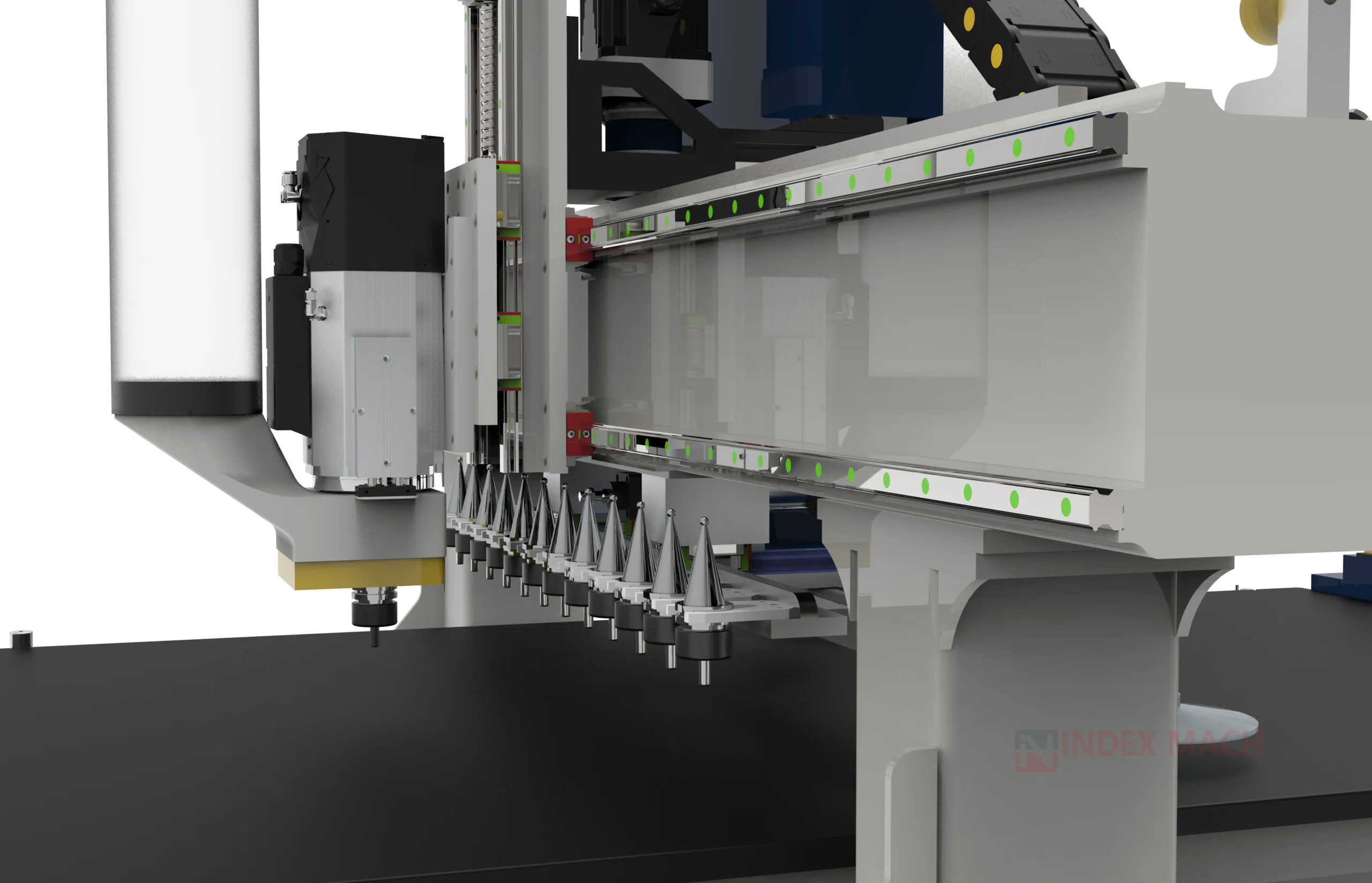
IG-110
$1,800 – $6,800
- Motor Power 1.5 - 4 kW (2 -5.4 hp)
- Operating Voltage 380V / 220V
IG-110 is our hinge boring machine for concealed-hinge cup and fixing holes.

Boring, planing and door machinery to complete your woodworking workshop. $1,800 – $6,800 typical factory range.
Hinge boring machines drill the cup and fixing holes for concealed cabinet hinges in one cycle. Planers flatten a face and edge; thicknessers bring the board to a uniform thickness so joinery stock is square before it reaches a CNC router or sliding table saw.
Cabinet hardware lines and solid-wood joinery shops are the usual buyers. Boring usually follows carcass or door machining; planing happens before accurate joinery.
Hinge borers are commonly specified by cup diameter (typically 35 mm), number of drill spindles and fence stops. Planer-thicknessers by cutter-block width, max thicknessing height and feed. Voltage follows the shop.
Concealed-hinge work runs on hinge boring machines. Rough-sawn stock is flattened and thicknessed on wood planers and thicknessers.
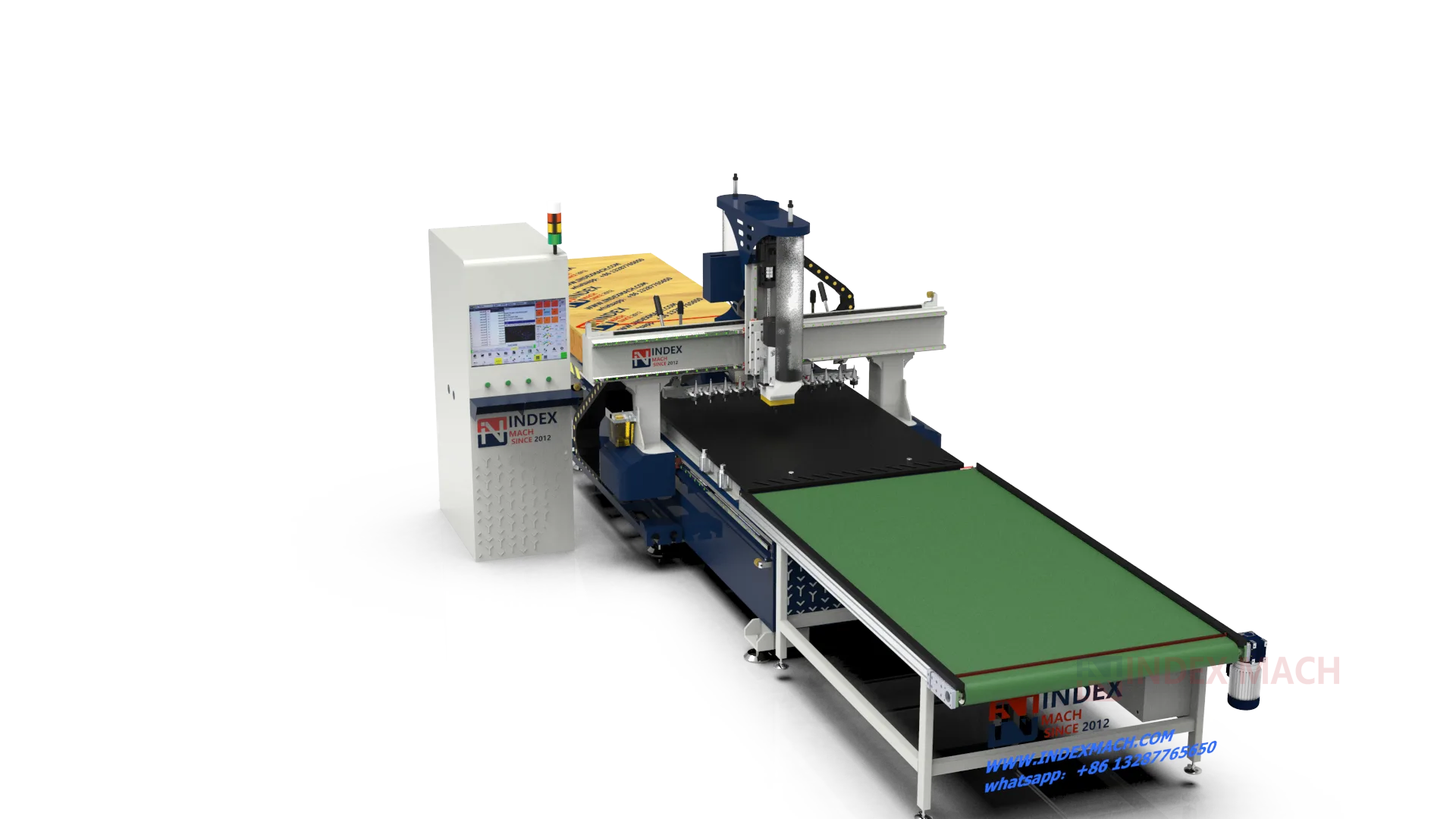
Hinge borers and planers complete the flow between CNC, saws and edge banders. Replace this placeholder with a real machine photo when available.
A hinge boring machine drills the 35 mm-class cup and fixing holes for concealed hinges in one cycle. Fences and stops locate the door or panel; multi-spindle heads keep batches consistent. This is general woodworking hardware prep.
Full-sheet nesting uses a CNC router. Lock pockets in door leaves use a door lock mortiser.
$1,800 – $6,800
IG-110 is our hinge boring machine for concealed-hinge cup and fixing holes.
A planer flattens a face and edge; a thicknesser brings the board to a uniform height so joinery stock is square before a CNC router or sliding table saw. Cutter-block width and max thicknessing height are the usual spec.
This is general woodworking stock preparation. Coat-ready faces after machining use a sander.
$2,000 – $6,100
IG-120 is our planer-thicknesser for flattening and dimensioning timber.
Product details
$1,800 – $6,800 typical factory range
They fill gaps the main CNC and saws do not: concealed-hinge cup and fixing holes on a hinge boring machine, and squared, thicknessed timber on a planer and thicknesser. Door shops also use them beside CNC routers for leaves and frames.
Planing happens before accurate joinery; hinge boring usually after carcass or door machining. Pair with sliding table saws and edge banding. Door-centric layouts: wooden door production lines.
Send hinge type and panel thickness, or max timber section for planing. Request a layout and quote.
| Parameter | Value |
|---|---|
| Capacity | See model spec |
| Motor Power | 1.5 - 4 kW (2 -5.4 hp) |
| Build | Cast-iron / steel |
| Accuracy | High precision |
| Working Voltage | 380V / 220V |
| Applications | Kitchen / wardrobe doors / Furniture doors / Joinery / furniture / Millwork |
| Materials | MDF / particleboard doors / Panel doors / Solid wood / Hardwood / softwood |
Values are the unique figures from the catalog models in this family. A single machine page has that build's exact sheet.