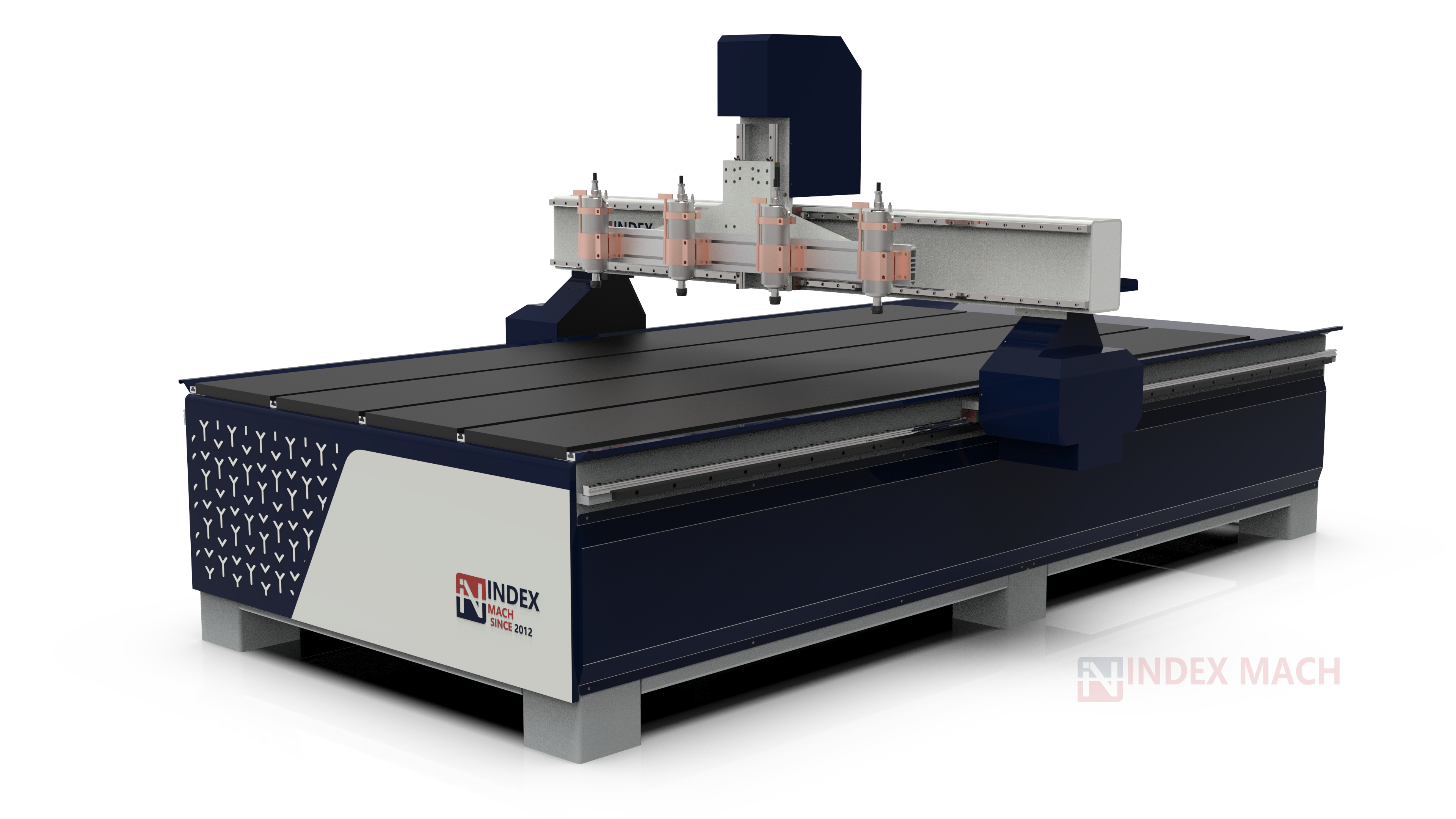
IMCR-MS1325
$2,800 – $5,900
- Working Area 1300 × 2500 mm (4×8 ft sheet)
- Spindle Water-cooled manual tool change · 2.2 kW (3 hp)
IMCR-MS1325 is a 1325 multi-spindle CNC for identical parts at volume on a 1300×2500 table.

Multi-spindle CNC routers that cut several identical parts at once — multi-head throughput for repeating door and furniture components. $2,800 – $5,900 typical factory range.
A multi-spindle CNC router (also called a multi-head CNC router) mounts several spindles on one gantry so the same toolpath runs on multiple blanks in a single pass. Head spacing matches the part pitch; T-slot clamps or fixtures hold the blanks (this series is not a vacuum nesting cell); servo axes and an industrial controller keep the gang in time. Buy this series when volume of the same part — not a mixed tool list — sets the shift.
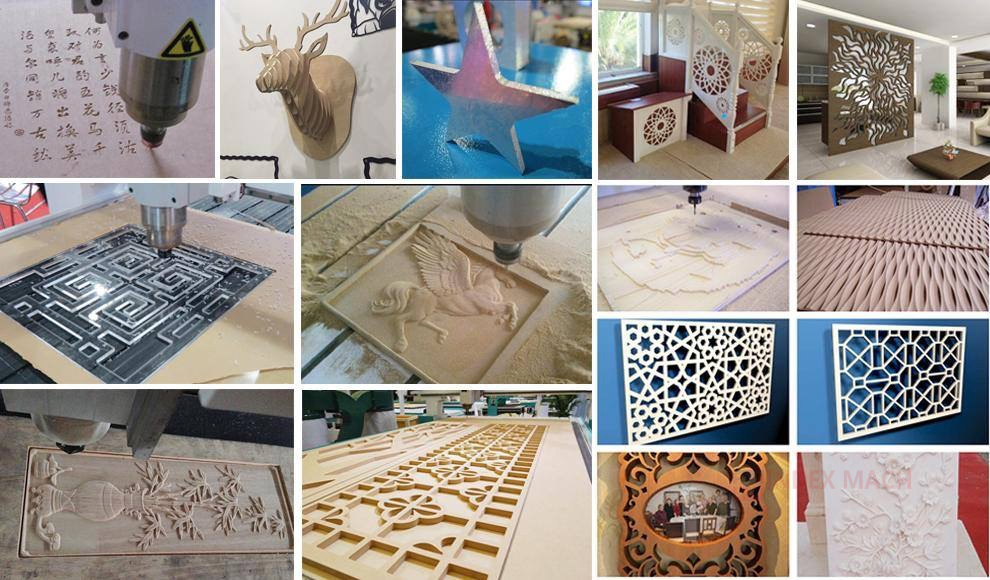
Typical work is repeating door components, drawer fronts, chair parts and other identical furniture blanks on engineered board (MDF, particleboard, plywood). That is a different job from full-sheet kitchen nesting on cabinet CNC routers, from multi-tool sign and door programs on ATC CNC routers, and from mixed one-off joinery on woodworking CNC routers.
The current 1325 cell is the IMCR-MS1325 (1300 × 2500 mm / 4×8 ft). Head count, spindle power, table format and plant voltage (220 V / 380 V / 440 V, 50/60 Hz) are set on the quote so the pitch matches your blank layout.
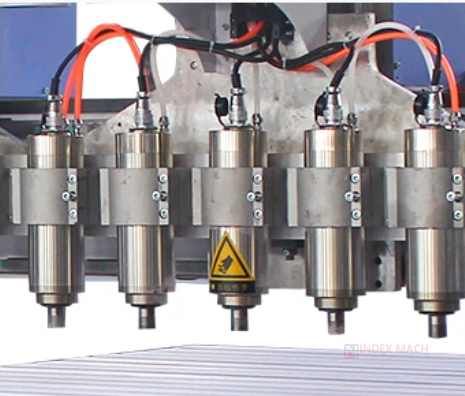
Close-up of a multi-spindle gantry: several matched spindles cut the same toolpath together — head count and pitch are set to your blank layout on the quote.
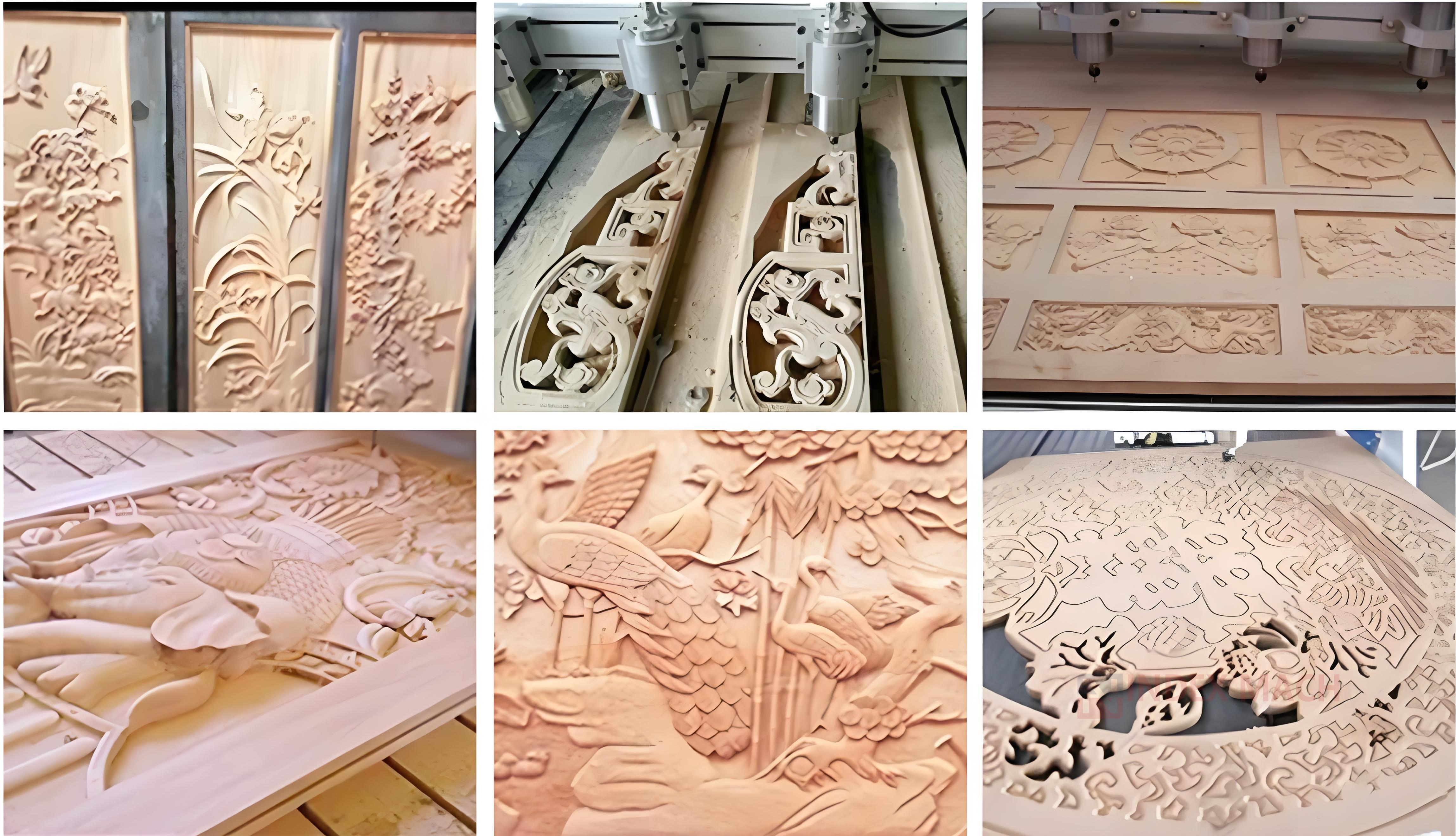
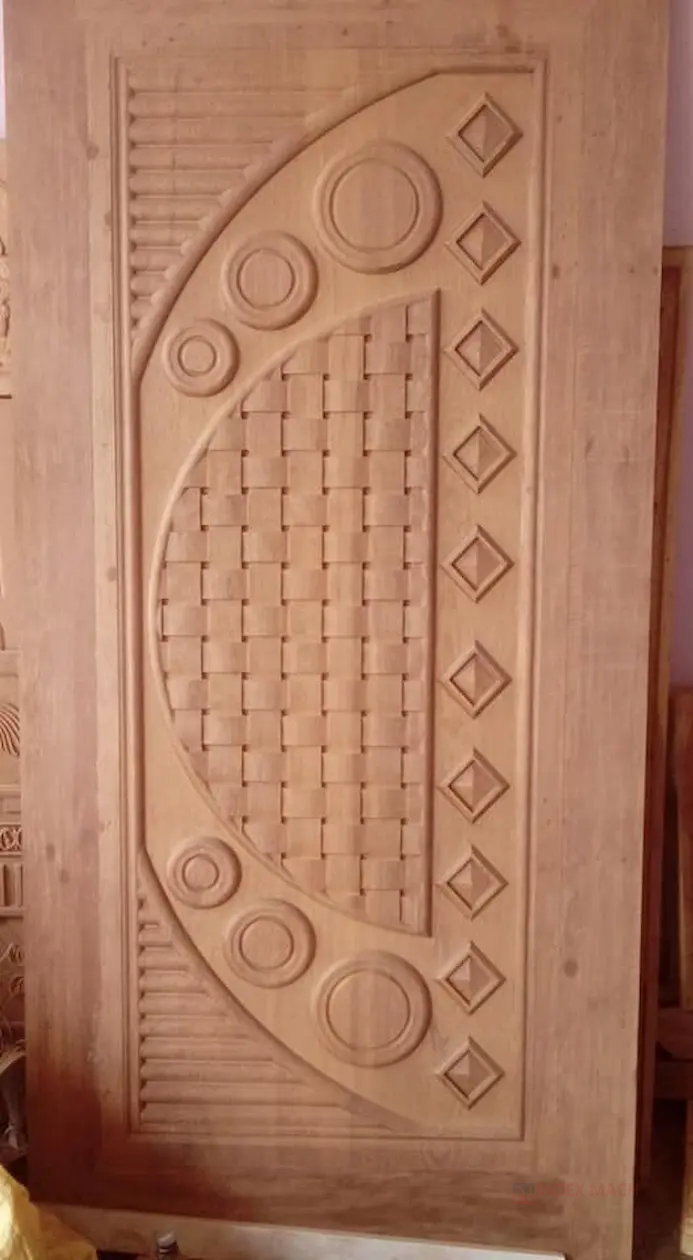
Relief door inserts, floral panels and decorative cut-outs — the same program on every head so several matching blanks finish together.
1 model
$2,800 – $5,900
IMCR-MS1325 is a 1325 multi-spindle CNC for identical parts at volume on a 1300×2500 table.
Product details
$2,800 – $5,900 typical factory range
A multi-spindle CNC router keeps several spindles in the cut on the same program. Identical blanks leave the table together — the usual step when one SKU runs for hours or days and a single spindle cannot keep up.
The current 1325 machine in this series is the IMCR-MS1325, a 4×8 multi-head cell for repeating panel parts. Further builds in this series keep the same gang-spindle idea with different head counts and bed sizes.
| Parameter | Value |
|---|---|
| Working Area | 1300 × 2500 mm (4×8 ft sheet) |
| Max. Working Size (single head) | 1300 × 2500 mm (4×8 ft) |
| Max. Working Size (batch) | 300 × 2500 mm (≈ 11.8 × 98.4 in) |
| Max. Workpiece Height | 200 mm (7.9 in) |
| Spindle Type | Water-cooled manual tool change |
| Spindle Power | 2.2 kW (3 hp) |
| Spindle Speed | 0 - 24,000 rpm |
| Control System | DSP |
| Drive Motors & Servos | Stepper motors |
| Operating Voltage | 380V / 3 Phase, 50/60Hz (Optional 220V/480V) |
| Applications | Panel & solid-wood furniture / Musical instruments / Crafts / gifts / housewares / Advertising / decoration |
| Materials | Solid wood / MDF / plywood / Solid tonewood (e.g. maple) / Acrylic / PMMA / HDPE / PVC / tooling board |
Values are the unique figures from the catalog models in this family. A single machine page has that build's exact sheet.
This series is the identical-part throughput cell — several spindles on one gantry cut the same toolpath at once. It is not the family CNC router explainer, not an ATC magazine for changing tools mid-program, and not a vacuum cabinet nesting cell for mixed kitchen cut-lists. Choose it when copies of one blank set the shift; choose something else when the tool list or the nest mix changes every job.
Start from a real blank drawing: workpiece width × pieces per cycle must fit the single-head working width (1300 mm on the IMCR-MS1325). That width rule sizes head count better than a brochure “4-head / 6-head” label.
Buy this series if most weeks you cut many copies of the same blank and want several finished parts per cycle. Typical work: cabinet and wardrobe door skins with cut-out or groove patterns, chair-back panels, table-leg boards, flat-carved bed-headboard borders, guitar / ukulele body blanks, crafts and giftware (relief panels, box lids, trays, frames), and repeating signage or décor panels (acrylic letters, HDPE / PVC signs, lattice screens). Typical shops: door plants, furniture component lines, instrument makers, giftware lines, and high-volume panel millwork.
Do not start here if every nest needs a different tool list — that is ATC CNC routers. Full-sheet kitchen and wardrobe carcass nests belong on cabinet CNC routers. Mixed joinery and one-off signs stay on woodworking CNC routers. Angled or multi-face carving is 4-axis or 5-axis CNC routers.
ATC CNC routers finish one sheet with many tools. Multi-spindle finishes many copies with the same tools. Cabinet CNC routers explode a furniture cut-list into a mixed nest on a zoned vacuum table; multi-spindle assumes the blank grid is the same SKU repeated, held in T-slots or fixtures — not vacuum zones for a full kitchen sheet.
If more than half the week is mixed carcass nesting, stay on cabinet CNC. If more than half the week is multi-tool door or sign programs, look at ATC. Stay here when the program is stable and throughput is limited by how many copies leave the table per pass.
Daily stock is MDF, particleboard, plywood, solid-wood blanks, and light plastics (acrylic / HDPE / PVC) for repeating décor parts. Water-cooled spindles with manual tool change and matched collets across heads are the usual build — confirm power and ER size on the quote. Tool length is set with a mechanical height adjuster on each spindle so the gang stays level. If your week is mostly sealed 4×8 kitchen sheets that need zoned vacuum, that is still the cabinet CNC job, not this series.
Handheld DSP and stepper axes keep the cell simple for operators who run the same program all day. Standard export voltage is 380 V three-phase (220 V / 480 V on request). Plant compressed air is not required for the standard machine; dust collection is optional and ordered with the cell or added later.
Send a typical identical blank (drawing or photo), blank width and how many fit across the pitch, material and thickness, target cycle time, and plant voltage. We match head count, pitch and bed from that layout — not from a generic head-count list. Request a quote, or browse installed machines.