Product Catalog

CNC Routers

CNC routers for nesting, cutting, drilling and carving wood, panels and composites — typically 1325 / 4×8 tables. $2,800 – $25,100 typical factory range.

How a CNC router works in production

A CNC router is a computer-controlled gantry: CAM software posts a toolpath, the controller drives X/Y/Z (and extra axes when fitted), and a spinning spindle cuts, nests, drills, grooves or carves the sheet. Hold-down is usually a zoned vacuum table for panels, or T-slot clamps for solid wood and mixed parts.

Typical materials are MDF, particleboard, plywood, solid wood, acrylic and composites. Furniture, cabinet, door, sign and joinery shops are the usual buyers. Marble, granite and wet acrylic use a stone CNC router.

Tables are built to the sheet. Common beds are 6090 (small-format), 1325 (1300 × 2500 mm / 4×8 ft), 1530 (about 5×10), 2030, 2040 and 2060. European 2500 × 1250 mm and 2800 × 2070 mm panels fit the same range. Production cells use an industrial controller (Syntec, LNC or equivalent), a water- or air-cooled spindle (often 5.5–9 kW, ER/ISO collet or an ATC magazine), and servo drives; lighter shops may run stepper motors. Voltage is built to the plant (220/380 V, 50/60 Hz).

Most shops start with cabinet CNC routers for sheet nesting, then step to ATC CNC routers when tool changes decide the cycle. Mixed joinery stays on woodworking CNC routers; identical-part volume on multi-spindle; angled or curved work on 4-axis or 5-axis CNC routers.

How a cabinet CNC router nests a sheet

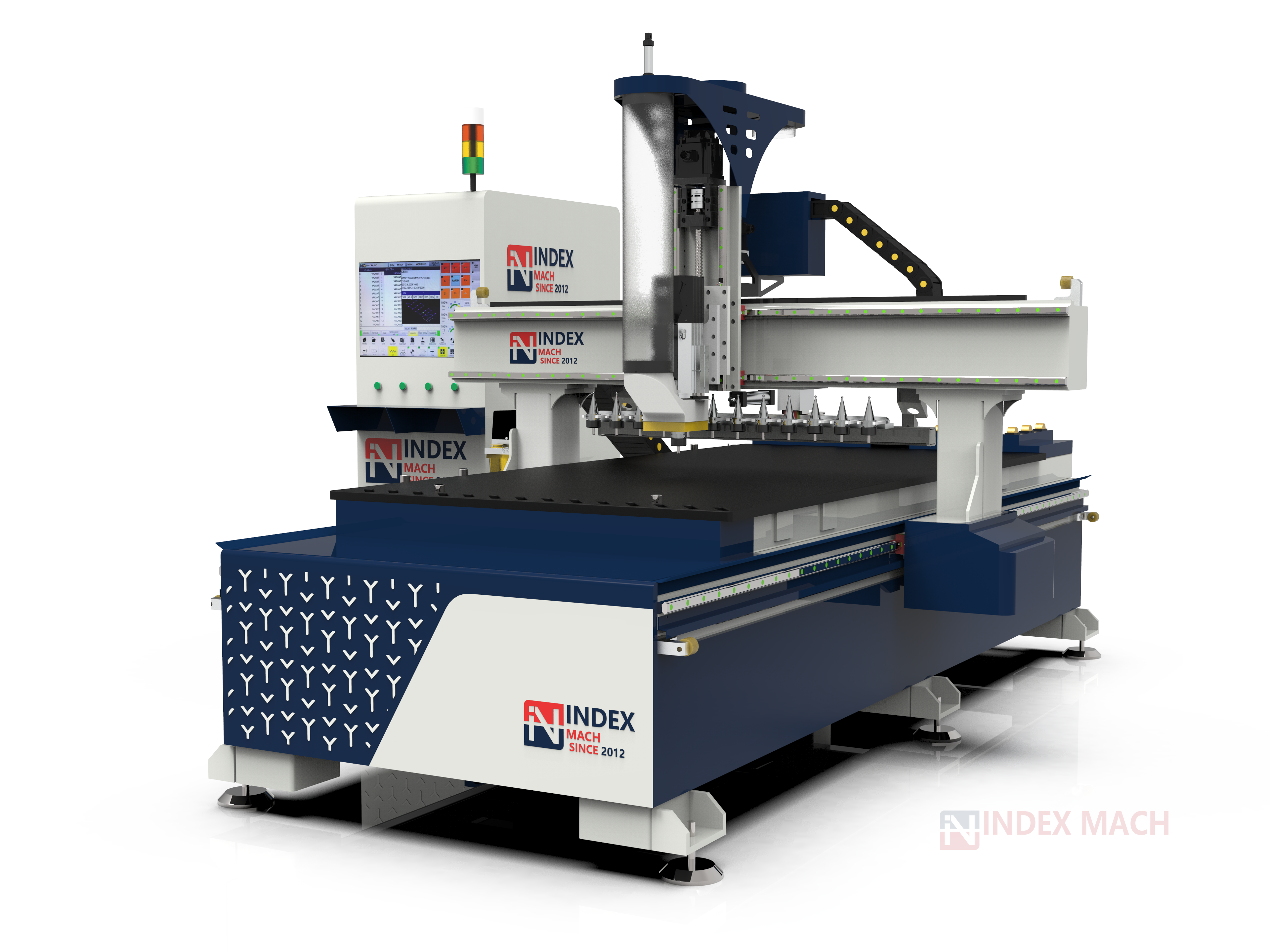
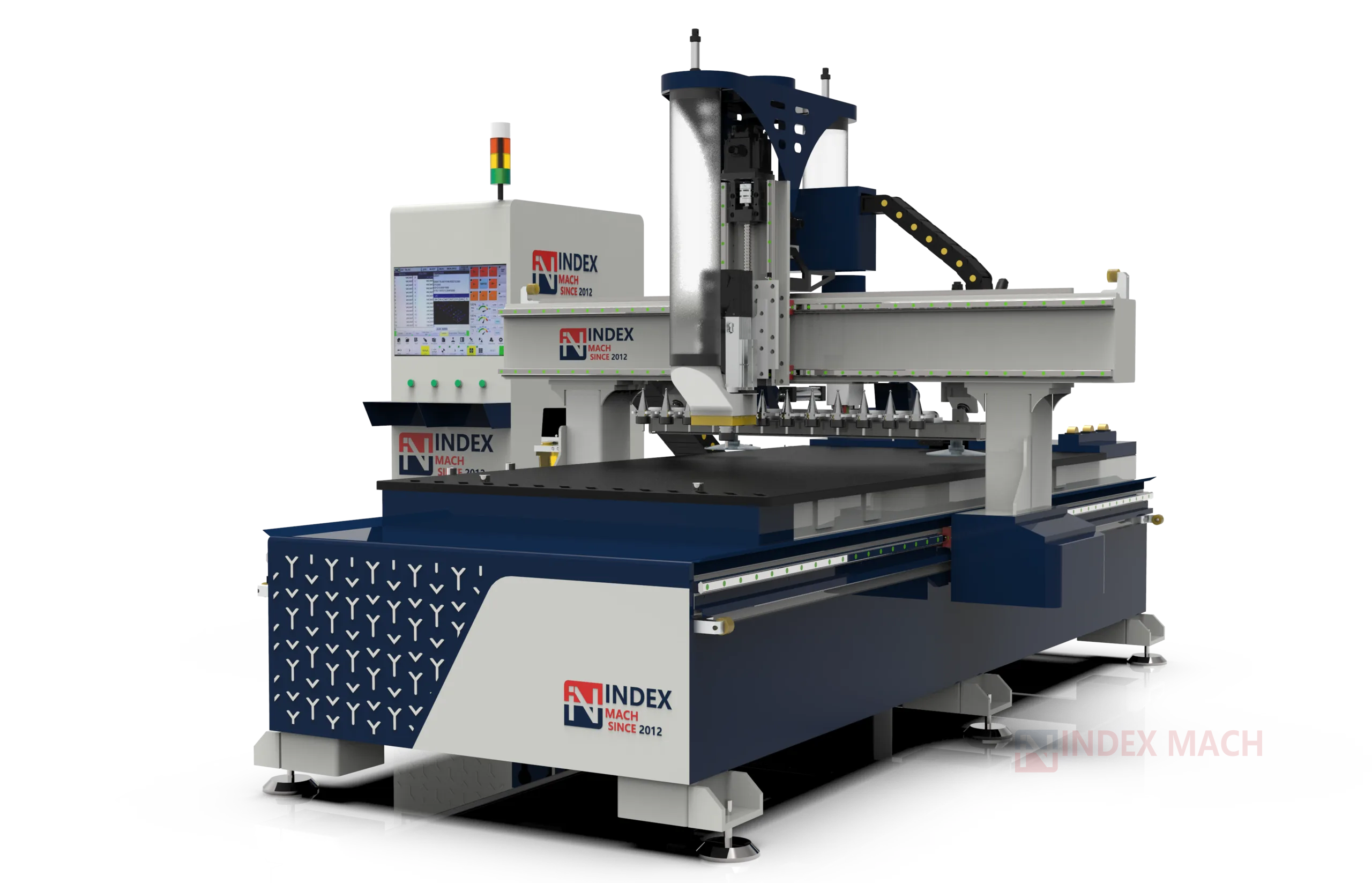
A Cabinet CNC Router (Nesting Machine) is an integrated processing cell engineered specifically for modern flat-pack furniture, custom kitchen cabinets, and wardrobe manufacturing. The cell only works as a pair: the machine hardware plus dedicated cabinet-splitting and nesting-optimization software. That software explodes each order into a panel cut-list, automatically nests parts to maximize material yield, and then drives drilling, grooving, and high-speed profiling on full sheets in a single continuous cycle.

Designed for heavy-duty panel processing, it features a zoned vacuum table that firmly secures materials like MDF, particleboard, plywood, and laminated boards during operation. Equipped with an Automatic Tool Changer (ATC), high-torque servo axes, and an industrial controller (such as Syntec or LNC), the machine seamlessly transitions between multiple tooling requirements without manual operator swaps. Standard bed dimensions include 1325 (1300 × 2500 mm / 4×8 ft), 1530 (1500 × 3000 mm / 5×10 ft), and 2040 (2000 × 4000 mm / 6.5×13 ft); table dimensions, spindle configurations, and electrical specifications (220V/380V/440V, 50/60 Hz) are fully customizable to match your exact production needs and plant standards.

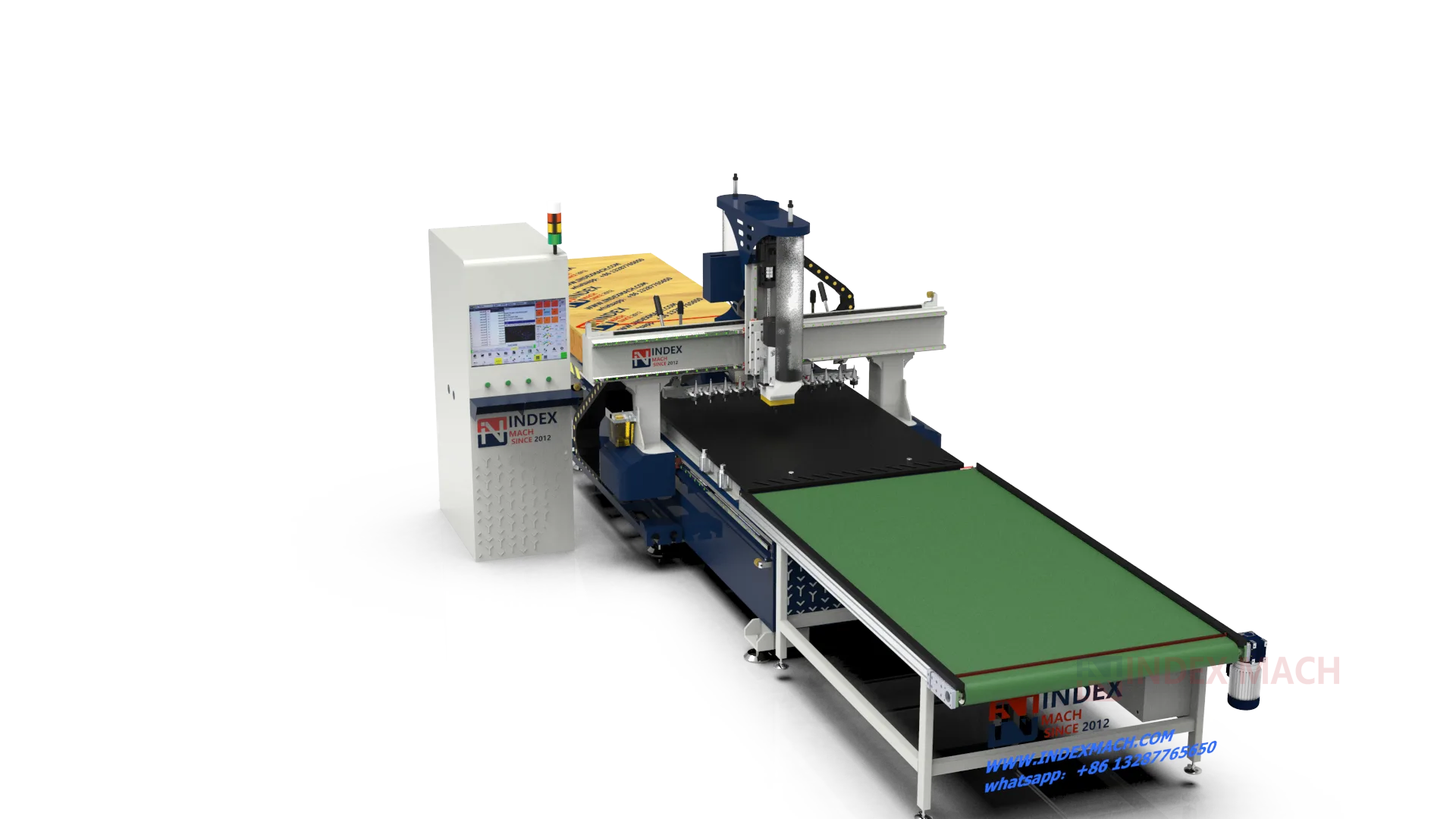
To maximize throughput and build a fully automated production cell, the system can be upgraded with flexible front-end automatic loading (including 1-to-many multi-machine feeding systems), automatic pre-labeling (barcode generation), and automated sorting and stacking via vision or barcode recognition. Integrating rear roller conveyors seamlessly streams processed parts to downstream processes—such as edge banding and drilling—minimizing manual handling. Furthermore, the unit supports real-time production visualization and direct integration with your plant's MES (Manufacturing Execution System), enabling data-driven tracking, digital shop-floor management, and complete smart factory automation.

IMCR-CB1325

IMCR-CB1325

4.7 (3)

$10,300 – $18,500

  • Working Area 1300 × 2500 mm (4×8 ft sheet)
  • Spindle Air-Cooled Automatic Tool Changer Spindle · 9 kW (12.1 hp)

IMCR-CB1325 is 1325 nesting CNC (1300×2500 mm / 4×8 ft) for cabinet and wardrobe sheets. Zoned vacuum table, air-cooled ATC spindle (9 kW), 220/380V export electrics.

How a woodworking CNC router handles mixed jobs

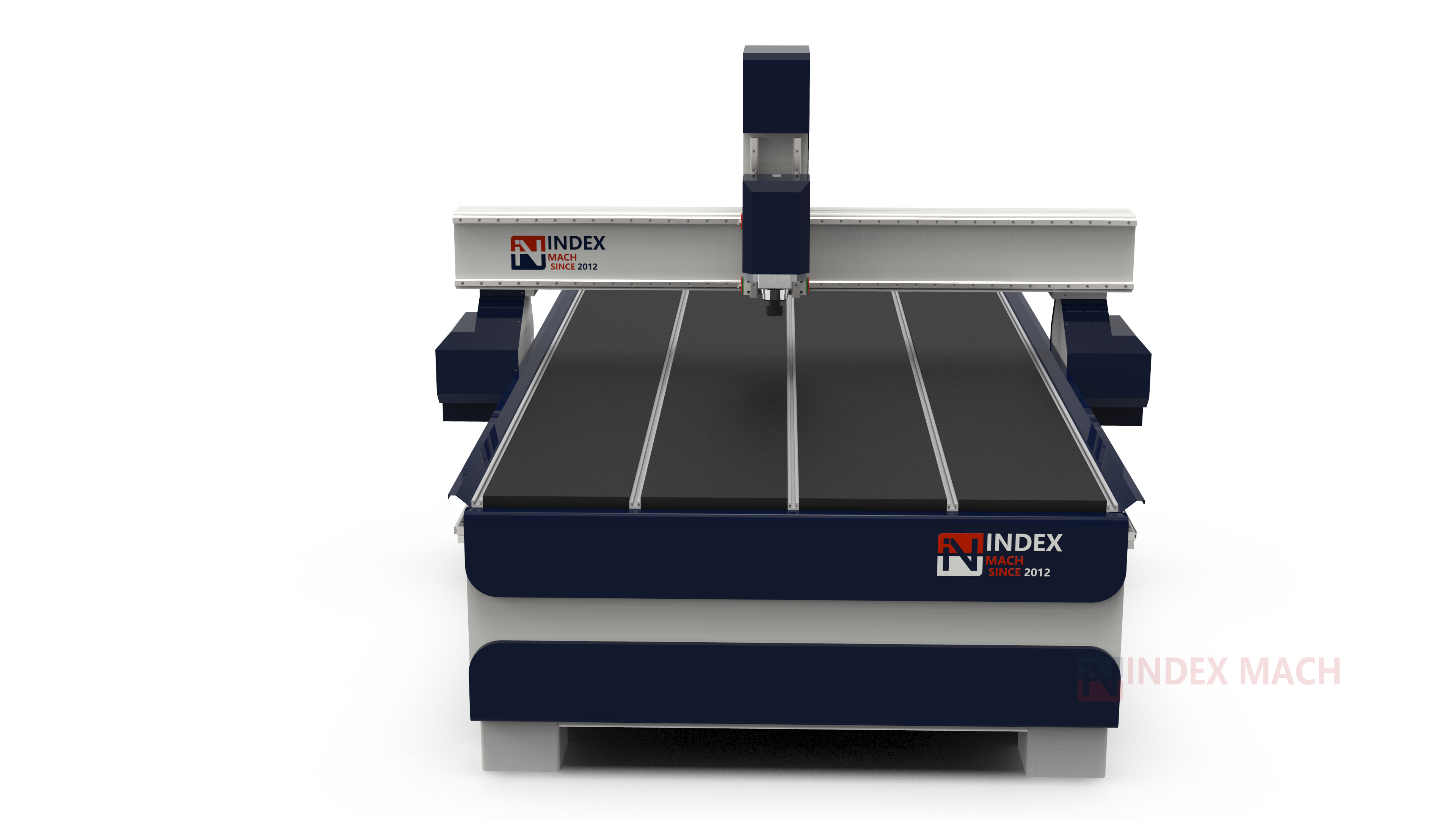
A woodworking CNC router serves as the versatile, general-purpose routing solution in your workshop: one machine cuts, engraves, drills. Joinery shops rely on it for custom millwork, furniture components, and solid-wood details; sign and display manufacturers use it for dimensional letters, acrylic fabrication, relief carvings, and exhibition structures. Available with adaptable table structures—including zoned vacuum suction, T-slot aluminum, or hybrid formats—it easily secures both full sheet goods and irregular solid-wood workpieces. that standard nesting tables struggle to hold.

Typical materials processed include solid wood, MDF, plywood, acrylic, and lightweight composites. Ideal buyers are joinery and millwork shops, sign makers, and furniture plants that balance custom orders with small-batch production. (For full-sheet kitchen and wardrobe nesting, explore our cabinet CNC routers; for stone or wet acrylic processing, refer to our stone CNC router; for complex angled or cylindrical carving, step up to our 4-axis or 5-axis CNC routers).

Standard woodworking CNC router configurations cover a full spectrum of working areas—from compact benchtop formats like 6060 (600×600 mm / 2×2 ft) and 6090 (600×900 mm / 2×3 ft) for small crafts and prototyping, mid-sized 1212 (1200×1200 mm / 4×4 ft) units for half-sheet processing, up to full-scale industrial beds including 1325 (1300×2500 mm / 4×8 ft), 1530 (1500×3000 mm / 5×10 ft), and 2040 (2000×4000 mm / 6.5×13 ft) for oversized sheet materials and mass production. Powered by industrial water- or air-cooled spindles (typically 3.2–9.0 kW), standard setups can be equipped with budget-friendly handheld controllers (RichAuto DSP A11/A18 or Weihong NK105), while high-end industrial controllers (Syntec or LNC) are provided when upgraded to an optional ATC CNC router system for seamless multi-tool processing. Bed dimensions, table configurations (Vacuum / T-Slot / Hybrid), spindle capacities, control system choices, plant voltage (220V/380V/440V, 50/60 Hz), and rotary attachments are fully customizable to match your exact shop requirements.

IMCR-WW1325

IMCR-WW1325

$12,100 – $20,600

  • Working Area 1300 × 2500 mm (4×8 ft sheet)
  • Spindle Water-cooled manual tool change · 2.2 kW (3 hp)

IMCR-WW1325 is a 1325 wood CNC machine for mixed joinery and signs — 1300×2500 table, not a high-volume cabinet nesting cell.

How an ATC CNC router changes tools mid-program

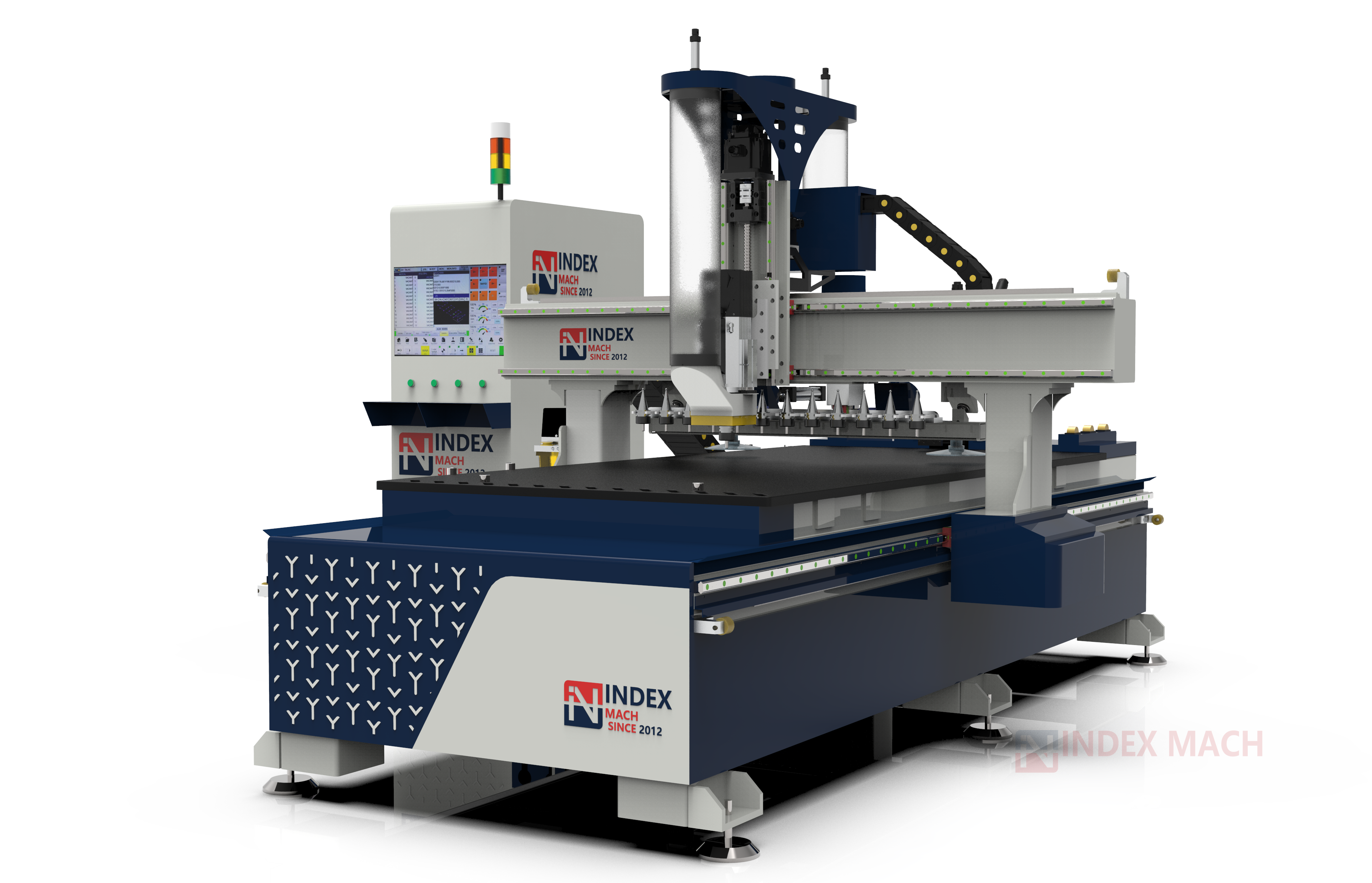
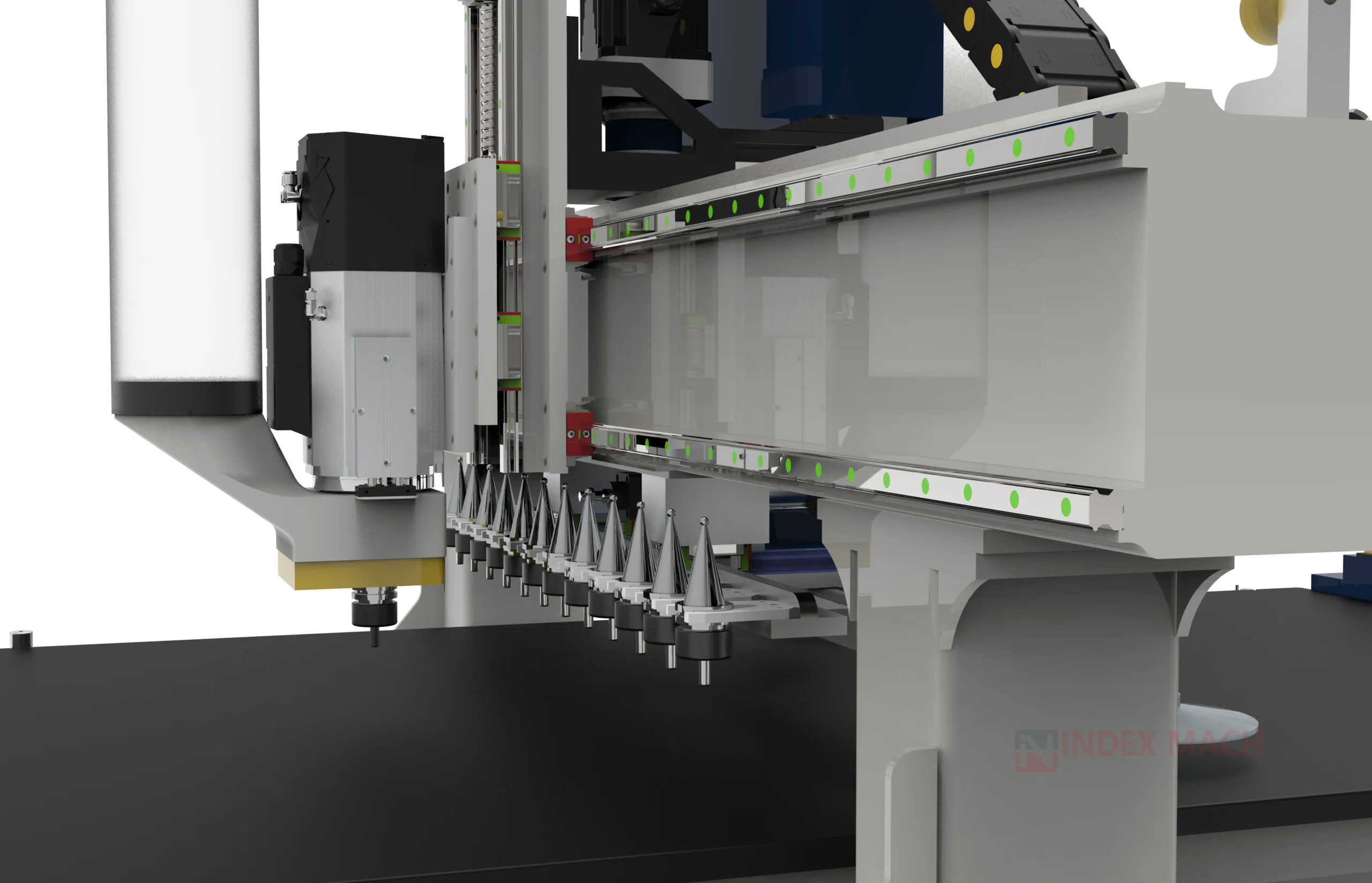
An ATC CNC router is a machine with a linear tool magazine (gantry-mounted or rear-fixed). The magazine swaps cutters mid-program so drilling, grooving, routing and profiling finish in one setup. Buy this series when the tool list — not a single nesting bit — sets the cycle.

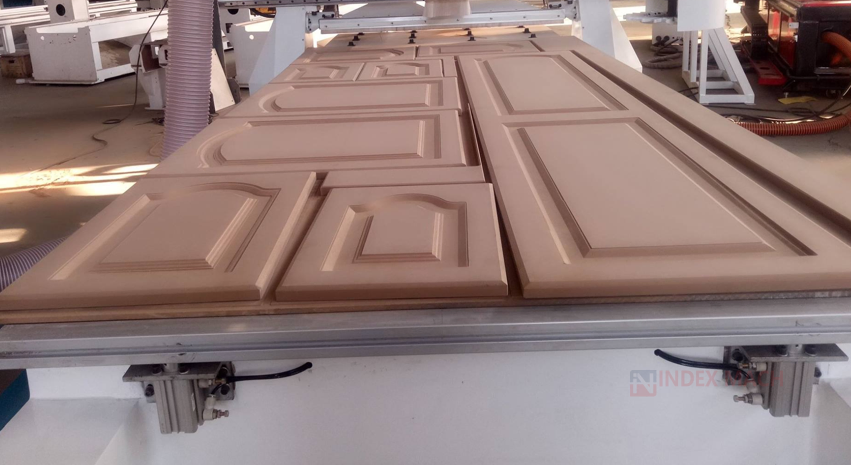
Typical jobs include advertising and exhibition cutting (acrylic, PVC foam, KT, ACM), cabinet-door programs (drill, groove and profile), and mixed-batch panels that need several tools on the same sheet. Materials are the sheets those jobs use: plastics and composites, MDF, particleboard, plywood, thermofoil and laminated door skins. (Full-sheet kitchen and wardrobe nesting belongs on cabinet CNC routers — those machines include ATC so the nest can cut, drill and groove; shops that still change tools by hand stay on woodworking CNC routers; angled or cylindrical carving steps up to 4-axis or 5-axis CNC routers.)

The standard 4×8 ft format is the IMCR-ATC1325 (1300×2500 mm) featuring a zoned vacuum table, while 1530, 2030, and custom sizes share the same linear magazine architecture. These industrial machines integrate a PC-based CNC controller (Syntec or LNC), closed-loop AC servos, and a 9.0 kW air-cooled ATC spindle paired with an 8 to 16-slot linear magazine. Handheld DSP controllers are reserved for entry-level woodworking CNC routers. Bed dimensions, magazine capacity, spindle specs, servo systems, pneumatic positioning pins, tool sensors, and regional operating voltages (220V/380V/440V, 50/60 Hz) are fully customizable to the factory.

IMCR-ATC1325

IMCR-ATC1325

$8,900 – $21,000

  • Working Area 1300 × 2500 mm (4×8 ft sheet)
  • Spindle Air-cooled Automatic Tool Changer Spindle · 9 kW (12.1 hp)

The IMCR-ATC1325 is a 1325 (1300×2500 mm / 4×8 ft) ATC CNC router for nested sheet work. Advertising and exhibition shops cut acrylic, PVC foam, KT and ACM in one program — the 12-tool magazine changes bits so the sheet stays on the table.

How a multi-spindle CNC router runs identical parts

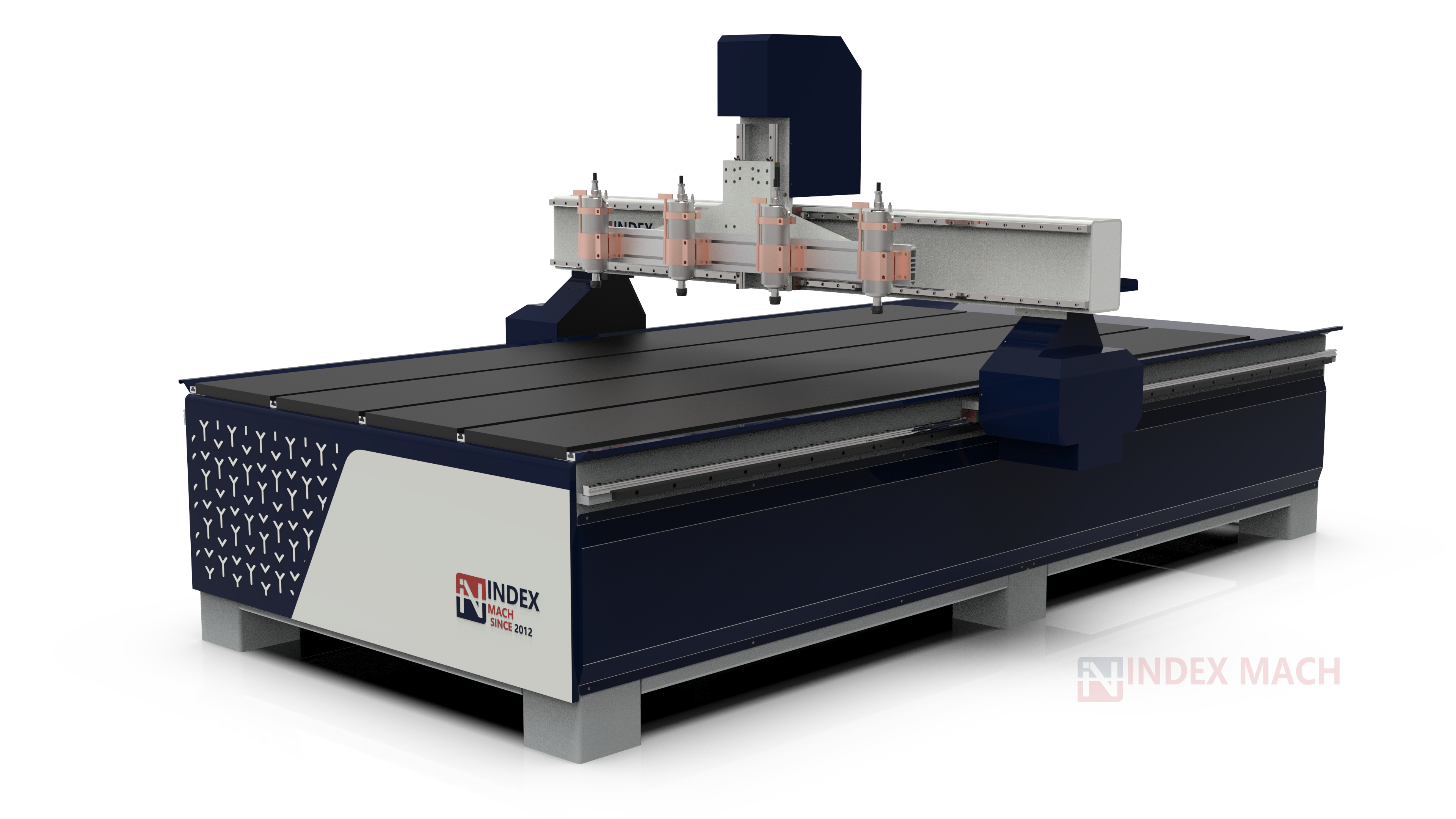
A multi-spindle CNC router (also called a multi-head CNC router) mounts several spindles on one gantry so the same toolpath runs on multiple blanks in a single pass. Head spacing matches the part pitch; T-slot clamps or fixtures hold the blanks (this series is not a vacuum nesting cell); servo axes and an industrial controller keep the gang in time. Buy this series when volume of the same part — not a mixed tool list — sets the shift.

Typical work is repeating door components, drawer fronts, chair parts and other identical furniture blanks on engineered board (MDF, particleboard, plywood). That is a different job from full-sheet kitchen nesting on cabinet CNC routers, from multi-tool sign and door programs on ATC CNC routers, and from mixed one-off joinery on woodworking CNC routers.

The current 1325 cell is the IMCR-MS1325 (1300 × 2500 mm / 4×8 ft). Head count, spindle power, table format and plant voltage (220 V / 380 V / 440 V, 50/60 Hz) are set on the quote so the pitch matches your blank layout.

IMCR-MS1325

IMCR-MS1325

$2,800 – $5,900

  • Working Area 1300 × 2500 mm (4×8 ft sheet)
  • Spindle Water-cooled manual tool change · 2.2 kW (3 hp)

IMCR-MS1325 is a 1325 multi-spindle CNC for identical parts at volume on a 1300×2500 table.

How a 4-axis CNC router reaches angled faces

A 4-axis CNC router adds a swivel or rotary axis so the spindle reaches angled faces, side bores and cylinders. Stairs, frames and shaped joinery are the usual parts.

The fourth axis is a C-axis on the head or a rotary fixture on the table. Syntec/LNC-class control, servo drives and a 1325-class table are common export builds.

Use 5-axis CNC routers when the head must tilt on two rotary axes.

IMCR-4A1325

IMCR-4A1325

$11,800 – $25,100

  • Working Area 1300 × 2500 mm (4×8 ft sheet)
  • Spindle Air-cooled Automatic Tool Changer Spindle · 9 kW (12.1 hp)

IMCR-4A1325 is our 1325 4-axis CNC with a swivelling spindle for angled and side-face work on a 1300×2500 table.

How a 5-axis CNC router finishes a curve

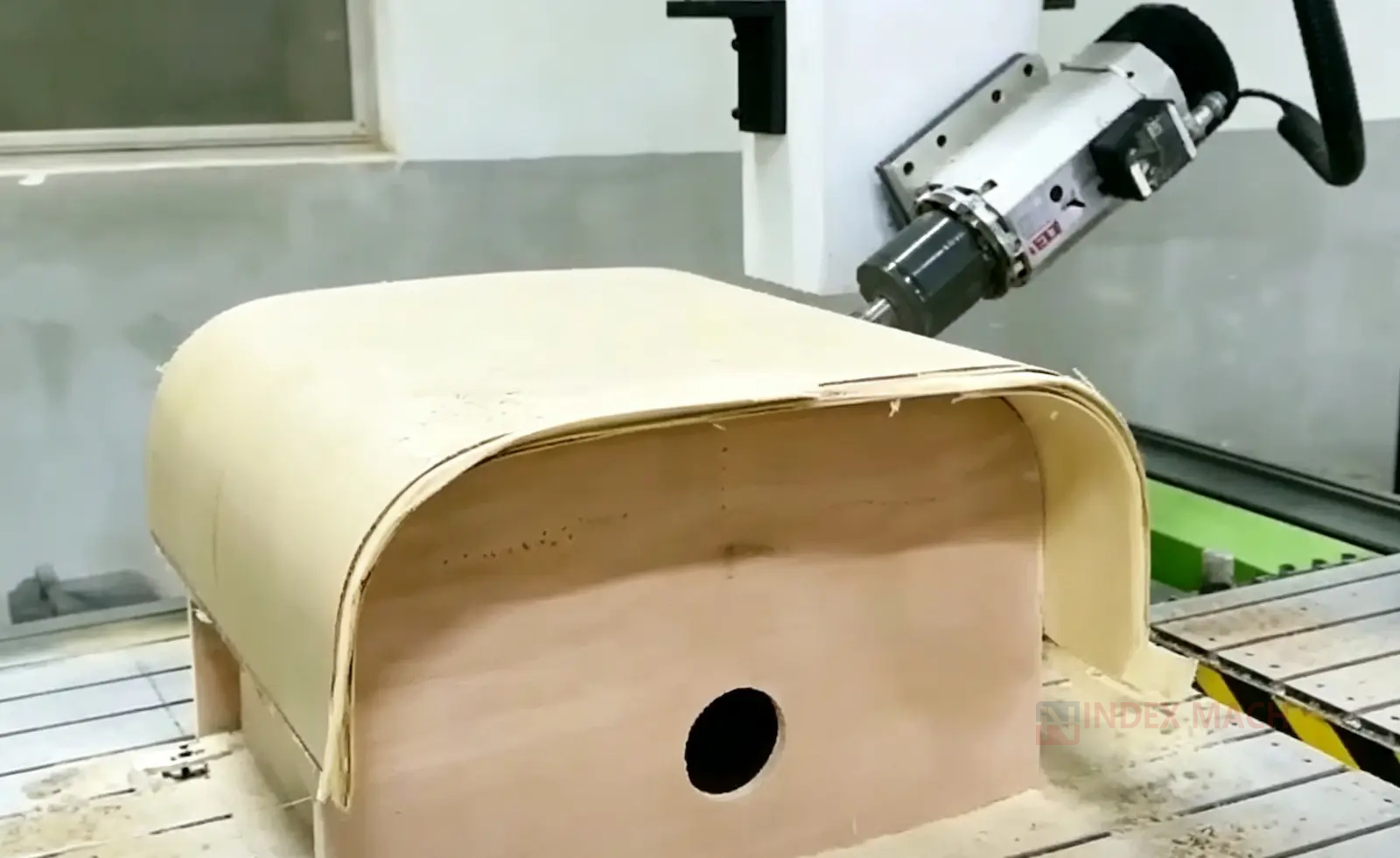
A 5-axis CNC router tilts the spindle on two rotary axes plus X/Y/Z, so curved surfaces and several faces finish in one clamp. Wood, composites and moulded furniture parts are the usual work.

Swing-head kinematics, servo axes and an industrial controller are the usual specification. Table size follows the part (often 1325). Metal moulds at gantry scale use gantry CNC milling machines.

Angled faces that need only one rotary axis stay on 4-axis CNC routers.

IMCR-5A1325

IMCR-5A1325

$8,500 – $21,000

  • Working Area 1300 × 2500 mm (4×8 ft sheet)
  • Spindle Air-cooled Automatic Tool Changer Spindle · 9 kW (12.1 hp)

IMCR-5A1325 is our 1325 5-axis CNC with swing-head motion for curved wood and composite parts on a 1300×2500 table.

How a stone CNC router cuts marble and granite

A stone CNC router uses a heavier frame, water cooling and corrosion-resistant parts so the spindle can cut and engrave marble, granite, sinks and acrylic in slurry. Countertops, stone panels and relief work are the usual jobs.

Water spray protects the tool and the material. Table size and spindle power follow slab size. Voltage and pump spec are built to the plant.

Wood sheet nesting stays on cabinet CNC routers.

IMCR-ST1325

IMCR-ST1325

$11,000 – $19,100

  • Working Area 1300 × 2500 mm (4×8 ft sheet)
  • Spindle Water-cooled manual tool change · 6 kW (8 hp)

IMCR-ST1325 is a 1325 stone CNC (1300×2500) with water cooling for marble, granite and sink cutouts.

How a door lock mortiser cuts pockets and hinges

A CNC door lock hole mortising machine cuts lock pockets, latch bores and hinge recesses in door leaves from one program. Wooden door plants run repeating leaves through the cell instead of hand-routing each pocket.

Fences and stops locate the leaf; a dedicated spindle or multi-bit setup machines the lock case and hinge recesses. Voltage follows the plant.

This series sits in the CNC router range. Full-sheet cabinet nesting uses cabinet CNC routers.

IMCR-LH1325

IMCR-LH1325

$7,600 – $15,400

  • Working Area 1300 × 2500 mm (4×8 ft sheet)
  • Spindle Air-Cooled manual tool change · 4.5 kW (6 hp)

IMCR-LH1325 is our CNC door lock and hinge mortiser for door-leaf pockets — not a nesting cabinet CNC.

What are you looking for?

Before purchasing a CNC or woodworking machine, defining your core production goals is essential. Are you launching a new workshop or expanding an industrial factory? What materials will you process—wood, composite panels, acrylic, or metal? Is your primary focus nesting, carving, edge banding, or laser cutting? Once your application and budget are defined, selecting the right machine becomes straightforward. IndexMACH provides complete support—including machine specifications, application demos, pricing, and software documentation. You can also submit your custom requirements below for a tailored configuration.

By submitting, you agree to our Privacy Policy.

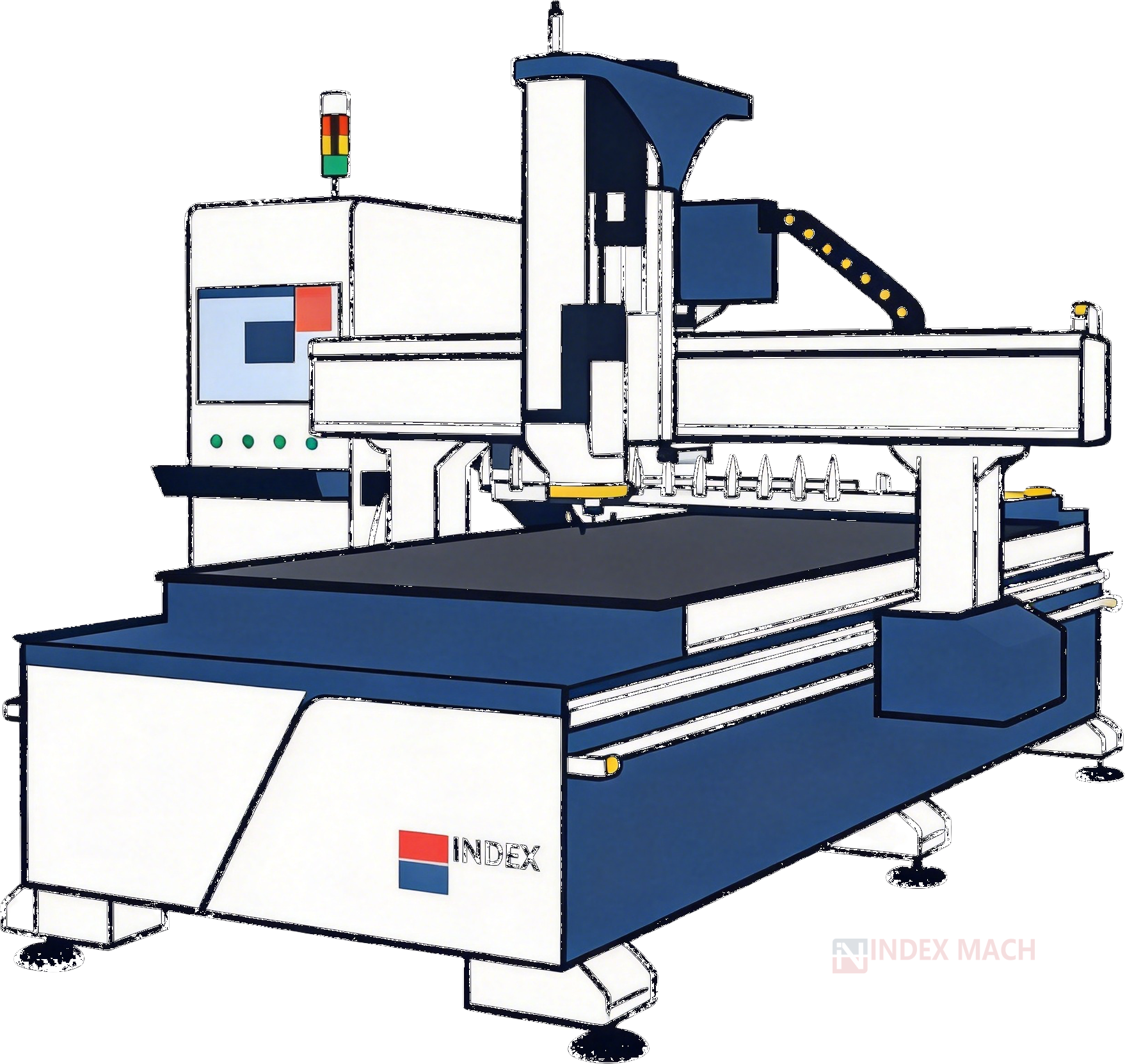
IndexMACH CNC router — line drawing of a gantry nesting cell

Product details

CNC Routers

$2,800 – $25,100 typical factory range

4.7(3 reviews)

What CNC routers do

A CNC router is a heavy-duty gantry cell designed for precision automated machining. When a CAM program posts a toolpath, the machine’s controller drives the X/Y/Z axes (along with extra rotational axes when fitted) while the high-speed spindle cuts, nests, drills, grooves, or carves raw stock. Supported Materials: MDF, particleboard, plywood, solid wood, acrylics, display plastics, XPS / EPS / PU insulation foam, and advanced composites. Note: Wet stone, marble, and granite machining require a specialized water-cooled Stone CNC Router.

Who Uses a CNC Router?

1. Cabinet & Furniture Plants

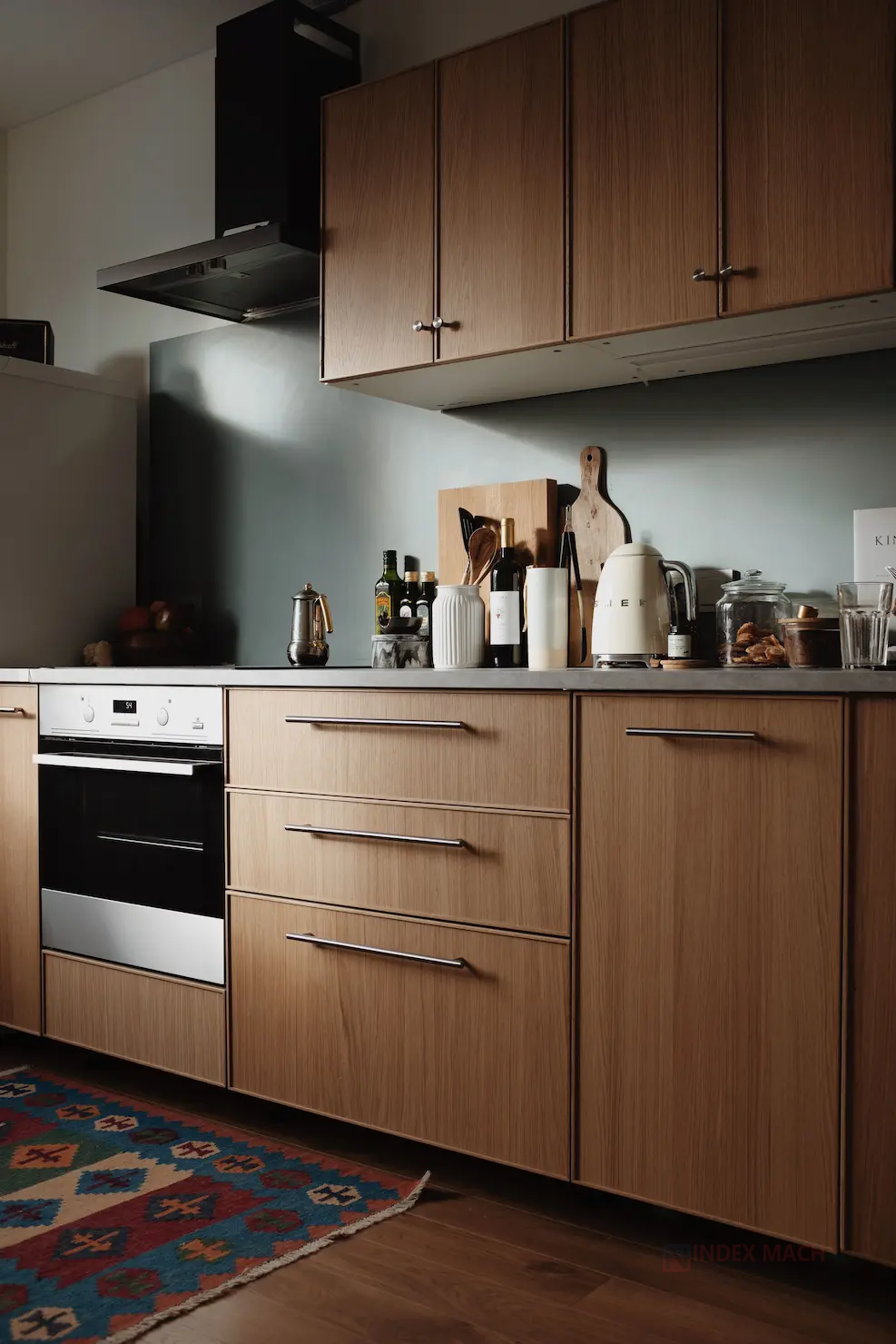
Furniture manufacturers use Cabinet CNC Routers to nest kitchens, wardrobes, and panel furniture directly from full sheet stock. Automatic Tool Changing (ATC): When a production job requires drilling, grooving, and cutting without manual tool swaps, the operation relies on an ATC CNC Router equipped with an automated tool magazine.

2. Insulation & Foam Core Producers

Producers of HVAC duct insulation, sandwich-panel cores, and shaped XPS/EPS/PU foam boards run custom nesting operations. A standard 4×8 ft vacuum table woodworking CNC router is the typical starting setup. Spindle speeds and dust collection parameters are specially calibrated for light, fibrous foam rather than heavy cabinet panels.

3. Signage, Exhibition & Plastics Fabricators

Sign makers and plastics shops cut acrylic, PVC foam, KT board, and Aluminum Composite Materials (ACM). Utilizing an ATC CNC Router allows seamless switching between profiling, finishing, and v-carving/lettering tools in a single program—keeping the material securely clamped to the vacuum table throughout the process.

4. Millwork, Joinery & Custom Woodworking Shops

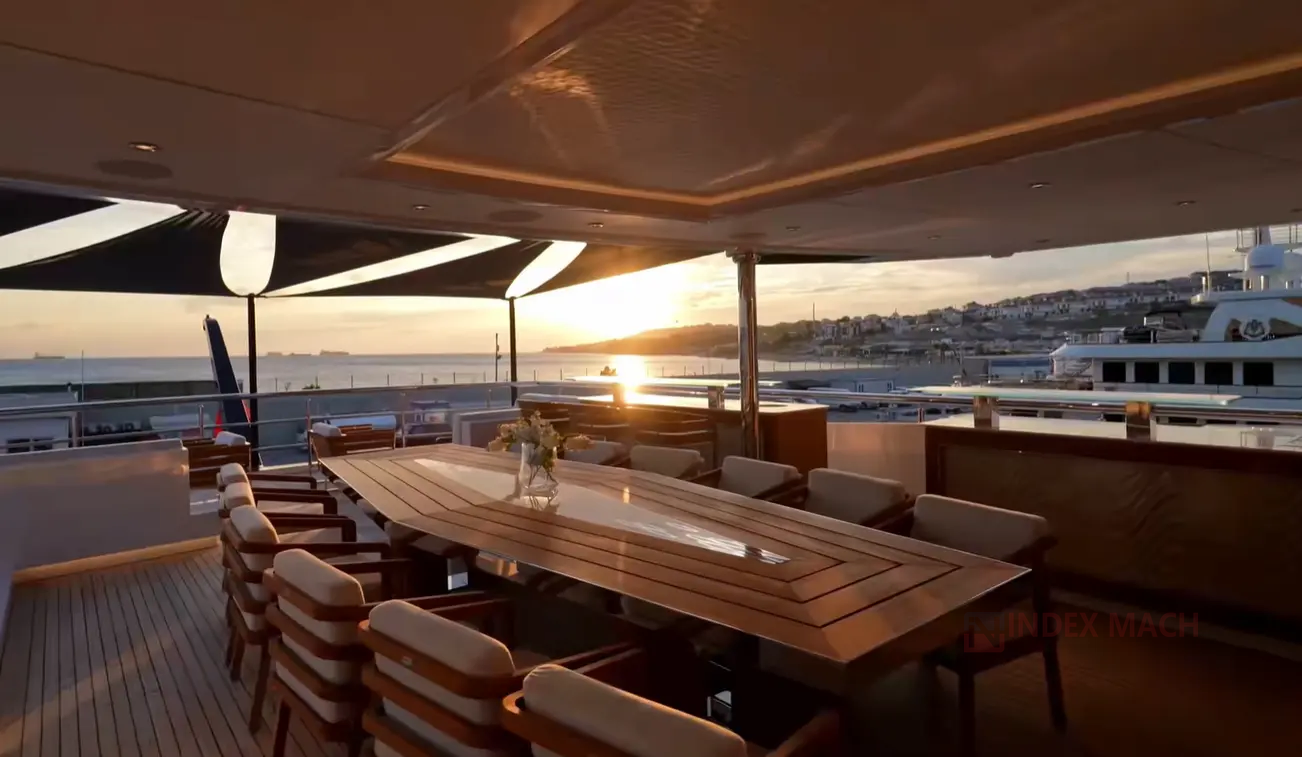
Custom joiners and millwork shops combine sheet panels with solid wood parts and one-off components on a multi-purpose Woodworking CNC Router. High-Volume Production: Shops running identical parts at volume utilize Multi-Spindle CNC Routers. Complex Geometry: Angled, curved, or 3D architectural work steps up to 4-Axis or 5-Axis CNC Routers. Door Hardware Processing: Precision pockets for door locks and hinges are handled by a dedicated CNC Door Lock Mortiser, rather than a standard sheet nesting cell.

5. Hobbyists, Design Studios & Training Centers

Small studios, prototype shops, and educational facilities run compact versions of full industrial gantry machines. Models such as a 6090 or compact woodworking CNC router allow one-person operations to produce signs, furniture parts, and prototypes. Built as industrial export machines with genuine CNC controllers and high-power spindles, these offer production reliability far beyond consumer desktop kits.

How a CNC Router Fits the Production Workflow

Cabinet & Furniture Manufacturing

The CNC router serves as the central hub between raw material processing and edge finishing. Full sheets are sized or nested on the CNC, then transferred directly to an edge banding machine.

Insulation & Foam Plants

The CNC operates as a standalone nesting cell. Raw stock arrives as 4×8 ft sheets or pre-cut panels, the router profiles and nests the components, and parts head straight to assembly or packaging.

Joinery Studios & Prototype Shops

Operates on a streamlined single-table setup: CAM Software → Controller → Spindle → Finished Part.

CNC Routers Technical Specifications

ParameterValue
Working Area1300 × 2500 mm (4×8 ft sheet)
Max. Working Size (single head)1300 × 2500 mm (4×8 ft)
Max. Working Size (batch)300 × 2500 mm (≈ 11.8 × 98.4 in)
Max. Workpiece Height200 mm (7.9 in)
Spindle TypeAir-cooled Automatic Tool Changer Spindle / Air-Cooled manual tool change / Water-cooled manual tool change
Spindle Power2.2 kW (3 hp) / 4.5 kW (6 hp) / 6 kW (8 hp) / 9 kW (12.1 hp)
Spindle Speed0 - 24,000 rpm
Tool Magazine TypeLinear ATC
Tool Capacity0 PC / 12 PC
Control SystemSyntec / LNC / Syntec / DSP / DSP
Drive Motors & ServosAC servo / Leadshine AC Servo / Delta AC Servo Motors & Drives (Standard) / Stepper motors
Vacuum Zones6 - 8 Zoned Matrix Table / Zoned vacuum table
Vacuum Pump Power7.5 KW (10.1 hp)
Operating Voltage380V / 3 Phase, 50/60Hz (Optional 220V/480V)
ApplicationsFurniture / millwork / Doors / frames / Seating / furniture / Millwork / moulds / Advertising / exhibition / Cabinet doors / Kitchen / wardrobe cabinets / Panel furniture / Wooden doors / Door factories / Panel & solid-wood furniture / Musical instruments / Crafts / gifts / housewares / Advertising / decoration / Kitchen / bath stone / Memorials / signage / Furniture carving / Doors / millwork
MaterialsSolid wood / MDF / engineered board / composites / Wood / composite / Acrylic / PVC foam / KT / ACM / PC / ABS / PP / PE / two-color sheet / Thermofoil / laminated MDF / Particleboard / plywood / engineered door blanks / Timber doors / Solid tonewood (e.g. maple) / PMMA / HDPE / PVC / tooling board / Marble / granite / quartz / Natural stone

Values are the unique figures from the catalog models in this family. A single machine page has that build's exact sheet.

Customer reviews

CNC Routers

4.73 reviews

Right size for a cabinet plant

Bought this as a nesting cell, not a carving machine. Sheet layout from our CAD/CAM drops on the 4×8 table and the parts come off square. IndexMACH walked us through the 380 V wiring before the crate arrived.

Sergio L.MexicoIMCR-CB1325

Nests a full 4×8 sheet without lifting

We run wardrobe and cabinet carcasses on the IMCR-CB1325 all day. The zoned vacuum holds a 1300×2500 board through cut, drill and groove, and the 9 kW spindle is enough for 18 mm particle board.

Nguyen T.VietnamIMCR-CB1325

Solid nesting CNC, vacuum zones matter

Accuracy holds on daily kitchen runs. We had to remap one vacuum zone after install, but support sent the valve layout the same day. Better on flat panels than on thick solid wood.

Ahmed A.United Arab EmiratesIMCR-CB1325

CNC Router Buyer's Guide

Pick a series based on your daily workload and production volume: a heavy-duty nesting cell for a high-volume plant, a general-purpose table for mixed shop work, or a compact bed for a studio/prototyping.

How to Choose a Table Size

Match the bed size directly to the primary sheet or blank size you process most days.

  • 6090 / 6060 / 1212 (Small-Format): Ideal for studios, training facilities, sign testing, and prototypes.
  • 1325 (1300 × 2500 mm / 4×8 ft Standard): The standard baseline for furniture sheets, insulation boards, and display plastics. Nesting cell: IMCR-CB1325. Mixed woodwork: IMCR-WW1325.
  • 1530 / 2030 / 2040 (Oversized Beds): Designed for nesting 5×10 ft sheets or extra-wide panel stock.
  • 2060 & Custom Sizes (Factory Production): Built to order based on specific factory floor plans and continuous production requirements.

European Standard Panels: Fully compatible with European standard sizes like 2500 × 1250 mm and 2800 × 2070 mm. Send us your standard sheet dimensions, and we will configure the optimal table layout.

Vacuum Table vs. T-Slot

  • Zoned Vacuum Table: The default choice for sheet nesting (MDF, particle board, insulation foam, flat plastics). Provides fast, secure, and mark-free hold-down.
  • T-Slot / Hybrid Table: Best suited for solid wood, small custom parts, and non-standard blanks that cannot create an airtight vacuum seal.

Note on Stone CNC: Stone CNC routers use mechanical clamps and continuous water flow on slabs, rather than standard furniture vacuum systems.

Machine Configurations & Axis Selection

  • Cabinet CNC Routers: Full-sheet nesting, high-speed routing, drilling, and grooving for panel furniture.
  • ATC CNC Routers: Equipped with an automatic tool magazine for seamless switching during sign making, door fabrication, and complex multi-tool programs.
  • Woodworking CNC Routers: Versatile setup for insulation foam, custom joinery, signage, and prototyping.
  • Multi-Spindle CNC Routers: Multiple heads working simultaneously to manufacture identical components at high volume.
  • 4-Axis / 5-Axis CNC Routers: Designed for complex 3D surface machining, angled faces, curved architectural parts, and organic forms.
  • CNC Door Lock Mortisers: Dedicated equipment for lock bodies and hinge pocket milling (not intended for sheet nesting).

Who should not start with a CNC router

  • Only straight cut-to-size packs: start with a computer panel saw. Add a router when parts need holes, grooves or nested shapes.
  • Metal or mould steel: that is a CNC milling machine, not a wood gantry.
  • Wet marble or granite: use a stone CNC router with water cooling — a furniture vacuum table will not last in slurry.
  • Lock and hinge pockets as the only job: use a door lock mortiser, not a 4×8 nest.

How we usually spec a first cell

Most furniture exporters start on a 1325 (4×8) vacuum table. Kitchen and wardrobe sheets go to cabinet CNC routers — the 1325 nest is the IMCR-CB1325. Advertising, exhibition plastics and multi-tool door programs go to ATC CNC routers — the 1325 magazine cell is the IMCR-ATC1325. If those two jobs share one operator and one bed, tell us the weekly mix; we will say whether one machine or two is cheaper over a year.

What to send for a quote

Send sheet or blank size, materials, the parts you run most days, target cabinets or sheets per shift, and plant voltage (220/380 V, phase, Hz). Photos of current parts help. We map that to a series and table — not a generic catalogue price. Request a quote, or browse installed machines.

CNC Routers Frequently Asked Questions

Frequently asked questions

What's the difference between a standard CNC router and an ATC model?

An ATC router carries a tool magazine and swaps tools mid-program so drilling, grooving and cutting run in one setup. See Machine Configurations & Axis Selection in the buyer’s guide.

Which CNC router suits cabinet / panel furniture production?

Most cabinet plants start with a Cabinet CNC router for sheet nesting. Use multi-spindle for identical parts at volume, or 4-axis / 5-axis for angled and curved work.

Do your CNC routers work with our existing CAD/CAM software?

Yes. They accept standard G-code from mainstream nesting/CAM packages. We supply a post-processor and set it up at commissioning.

Which table size do I need — 1325 or 2030?

1325 (1300 × 2500 mm) fits a standard 4×8 ft sheet. Step up when you run 5×10 or oversized boards. Details in How to Choose a Table Size.

Vacuum table or T-slot — which clamping should I choose?

Zoned vacuum is the default for nesting MDF and particle board. T-slot (or a hybrid) suits solid wood and parts that vacuum cannot seal. See Vacuum Table vs. T-Slot.

What voltage and power supply do you ship?

Export machines are built for 220 V or 380 V, 50/60 Hz, single- or three-phase. Include local voltage, phase and available kW in the enquiry.

What about lead time, installation and operator training?

We confirm a date with the quote, then packing, commissioning and operator training. What to send for a quote.

Is a CNC router the same as a CNC mill or a beam saw?

No. A CNC mill is for metal and moulds. A computer panel saw rips stacked boards to rectangles. A CNC router machines nested or shaped parts on a gantry table. Many furniture plants run a saw and a router, not one machine for both jobs.

Can one CNC router nest cabinets and also do 5-axis carving?

Do not spec one cell for both. Full-sheet kitchen nesting belongs on cabinet CNC routers. Multi-tool sign or door programs belong on ATC CNC routers. Curved multi-face work is a 5-axis CNC router. Mixing those jobs on one bed usually costs more in changeovers than a second machine.

What should I send to get a usable CNC router quote?

Sheet or blank size, materials, the parts you run most days, target output, and plant voltage (220/380 V, phase, Hz). Photos of current parts help. Use What to send for a quote — we map that to a series and table, not a generic catalogue price.

Request a Demo