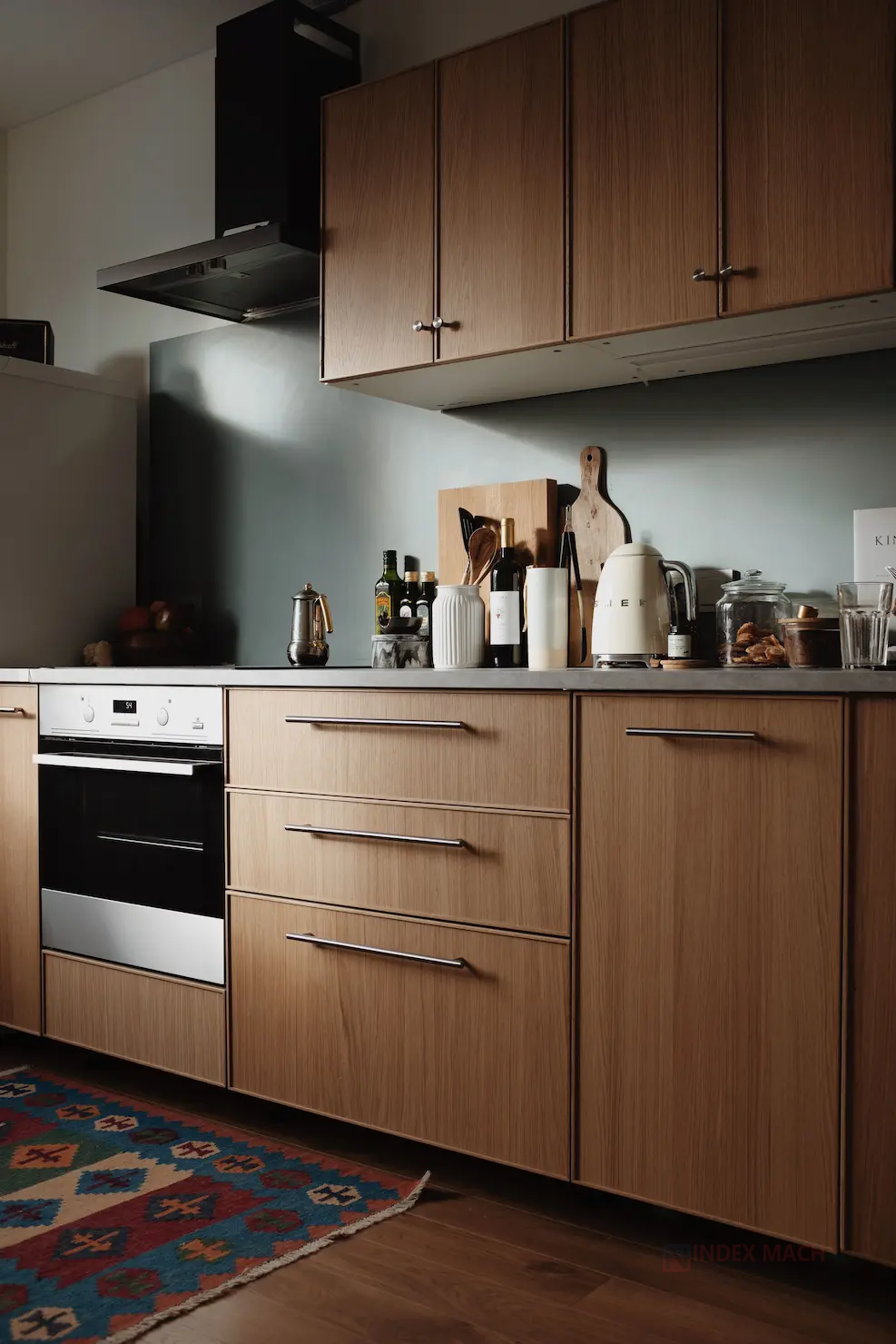
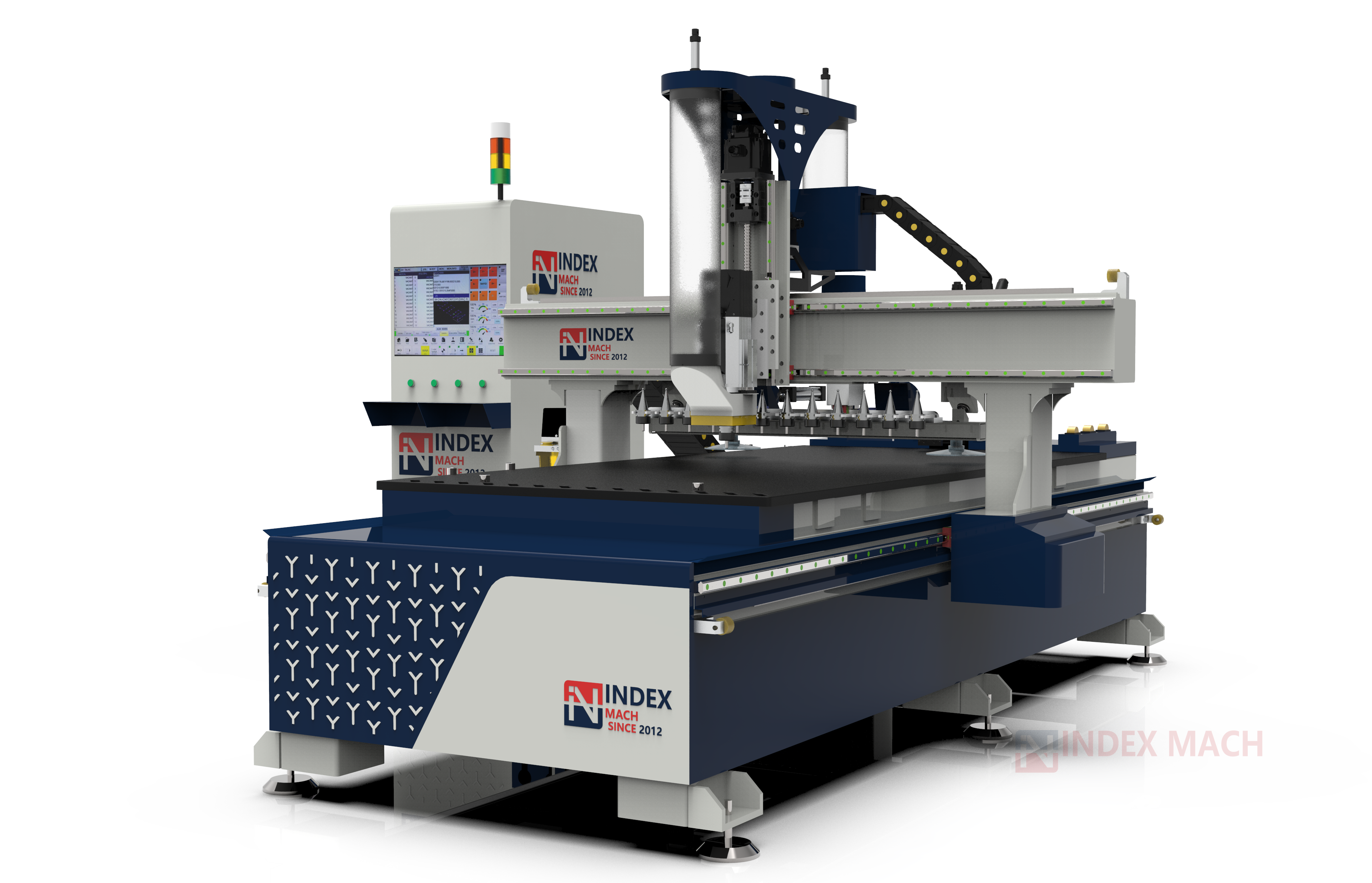
CNC Routers

Cabinet CNC Routers

Cabinet CNC routers for nesting kitchen and wardrobe parts — vacuum-table cut, drill and groove from 4×8 / 1325 sheets. $10,300 – $18,500 typical factory range.

How a cabinet CNC router nests a sheet

A Cabinet CNC Router (Nesting Machine) is an integrated processing cell engineered specifically for modern flat-pack furniture, custom kitchen cabinets, and wardrobe manufacturing. The cell only works as a pair: the machine hardware plus dedicated cabinet-splitting and nesting-optimization software. That software explodes each order into a panel cut-list, automatically nests parts to maximize material yield, and then drives drilling, grooving, and high-speed profiling on full sheets in a single continuous cycle.

Designed for heavy-duty panel processing, it features a zoned vacuum table that firmly secures materials like MDF, particleboard, plywood, and laminated boards during operation. Equipped with an Automatic Tool Changer (ATC), high-torque servo axes, and an industrial controller (such as Syntec or LNC), the machine seamlessly transitions between multiple tooling requirements without manual operator swaps. Standard bed dimensions include 1325 (1300 × 2500 mm / 4×8 ft), 1530 (1500 × 3000 mm / 5×10 ft), and 2040 (2000 × 4000 mm / 6.5×13 ft); table dimensions, spindle configurations, and electrical specifications (220V/380V/440V, 50/60 Hz) are fully customizable to match your exact production needs and plant standards.

To maximize throughput and build a fully automated production cell, the system can be upgraded with flexible front-end automatic loading (including 1-to-many multi-machine feeding systems), automatic pre-labeling (barcode generation), and automated sorting and stacking via vision or barcode recognition. Integrating rear roller conveyors seamlessly streams processed parts to downstream processes—such as edge banding and drilling—minimizing manual handling. Furthermore, the unit supports real-time production visualization and direct integration with your plant's MES (Manufacturing Execution System), enabling data-driven tracking, digital shop-floor management, and complete smart factory automation.

1 model

IMCR-CB1325

IMCR-CB1325

4.7 (3)

$10,300 – $18,500

  • Working Area 1300 × 2500 mm (4×8 ft sheet)
  • Spindle Air-Cooled Automatic Tool Changer Spindle · 9 kW (12.1 hp)

IMCR-CB1325 is 1325 nesting CNC (1300×2500 mm / 4×8 ft) for cabinet and wardrobe sheets. Zoned vacuum table, air-cooled ATC spindle (9 kW), 220/380V export electrics.

What are you looking for?

Before purchasing a CNC or woodworking machine, defining your core production goals is essential. Are you launching a new workshop or expanding an industrial factory? What materials will you process—wood, composite panels, acrylic, or metal? Is your primary focus nesting, carving, edge banding, or laser cutting? Once your application and budget are defined, selecting the right machine becomes straightforward. IndexMACH provides complete support—including machine specifications, application demos, pricing, and software documentation. You can also submit your custom requirements below for a tailored configuration.

By submitting, you agree to our Privacy Policy.

Product details

Cabinet CNC Routers

$10,300 – $18,500 typical factory range

4.7(3 reviews)

What a cabinet CNC router does on the floor

A cabinet CNC router turns a 4×8 (1325) or 5×10 sheet into nested carcass, drawer and wardrobe parts. The vacuum table holds the board; one program cuts the outline, drills hinge and dowel holes, and grooves for backs. That is the usual first CNC in a kitchen or flat-pack plant.

The current 1325 machine in this series is the IMCR-CB1325.

Cabinet CNC Routers Technical Specifications

ParameterValue
Working Area1300 × 2500 mm (4×8 ft sheet)
Max. Workpiece Height200 mm (7.9 in)
Spindle TypeAir-Cooled Automatic Tool Changer Spindle
Spindle Power9 kW (12.1 hp)
Spindle Speed0 - 24,000 rpm
Tool Magazine TypeLinear ATC
Tool Capacity12 PC
Control SystemLNC
Drive Motors & ServosDelta AC Servo Motors & Drives (Standard)
Vacuum Zones6 - 8 Zoned Matrix Table
Vacuum Pump Power7.5 KW (10.1 hp)
Operating Voltage380V / 3 Phase, 50/60Hz (Optional 220V/480V)
ApplicationsKitchen / wardrobe cabinets / Panel furniture
MaterialsParticleboard / MDF / plywood

Values are the unique figures from the catalog models in this family. A single machine page has that build's exact sheet.

Customer reviews

Cabinet CNC Routers

4.73 reviews

Right size for a cabinet plant

Bought this as a nesting cell, not a carving machine. Sheet layout from our CAD/CAM drops on the 4×8 table and the parts come off square. IndexMACH walked us through the 380 V wiring before the crate arrived.

Sergio L.MexicoIMCR-CB1325

Nests a full 4×8 sheet without lifting

We run wardrobe and cabinet carcasses on the IMCR-CB1325 all day. The zoned vacuum holds a 1300×2500 board through cut, drill and groove, and the 9 kW spindle is enough for 18 mm particle board.

Nguyen T.VietnamIMCR-CB1325

Solid nesting CNC, vacuum zones matter

Accuracy holds on daily kitchen runs. We had to remap one vacuum zone after install, but support sent the valve layout the same day. Better on flat panels than on thick solid wood.

Ahmed A.United Arab EmiratesIMCR-CB1325

How to choose a cabinet CNC router

This series is the nesting cell for kitchen and wardrobe sheets — not a general CNC router explainer. Pick bed, hold-down and whether you still need a separate ATC for door programs.

Nesting cell vs computer panel saw

A computer panel saw rips stacked boards to size. A cabinet CNC router machines each nested part (cut-out, boring, grooving) from a sheet already on the vacuum table. Many plants run both.

1325 or a larger bed

1325 (1300 × 2500 mm / 4×8 ft) covers most export cabinet jobs — the catalog cell is the IMCR-CB1325. Choose 1530 / 2030 / 2040 when you nest 5×10 or oversized boards.

Who this series is for — and who it is not

Buy this series if most days you explode kitchen, wardrobe or export furniture orders into a nested sheet, then cut, drill and groove the boxes on a vacuum table.

Do not start here if the main job is advertising plastics, relief carving, or lock/hinge pockets. Those are ATC CNC routers, 5-axis CNC routers, or a CNC door lock mortiser. A general CNC router explainer lives on the family page — this series is only the nesting cell.

Materials and thickness

Daily stock is 12–25 mm MDF, particleboard, plywood and laminated furniture board. Zoned vacuum holds a sealed sheet; unsealed solid-wood slabs and very thin foam need a different table or extra zones. If more than half the week is acrylic or ACM signage, spec the ATC series instead of forcing those sheets onto a carcass nest.

Software and daily output

Machines accept G-code from Cabinet Vision, Alphacam, Vectric and similar nesting posts. We match the post at commissioning — you do not rewrite the cut-list package to buy this cell. A single 1325 with one operator is limited more by loading and sheet changes than by cut time. If you need labeled, auto-loaded output, say so; that is still this cabinet CNC router series, not a different machine family.

When to look at the ATC series instead

The IMCR-CB1325 already changes tools for cut, drill and groove on the nest. Look at ATC CNC routers when the main job is multi-tool door and mixed operation programs rather than full-sheet nesting.

Loading, labeling and outfeed

For a full cabinet line add infeed loading, optional pre-labeling, and outfeed to edge banding. We size that with the machine, not as a separate guess.

What to send for a layout

Send sheet size, thickness and how many cabinets you run per day. We match 1325 or a larger bed and a vacuum layout. Request a quote, or browse installed machines.

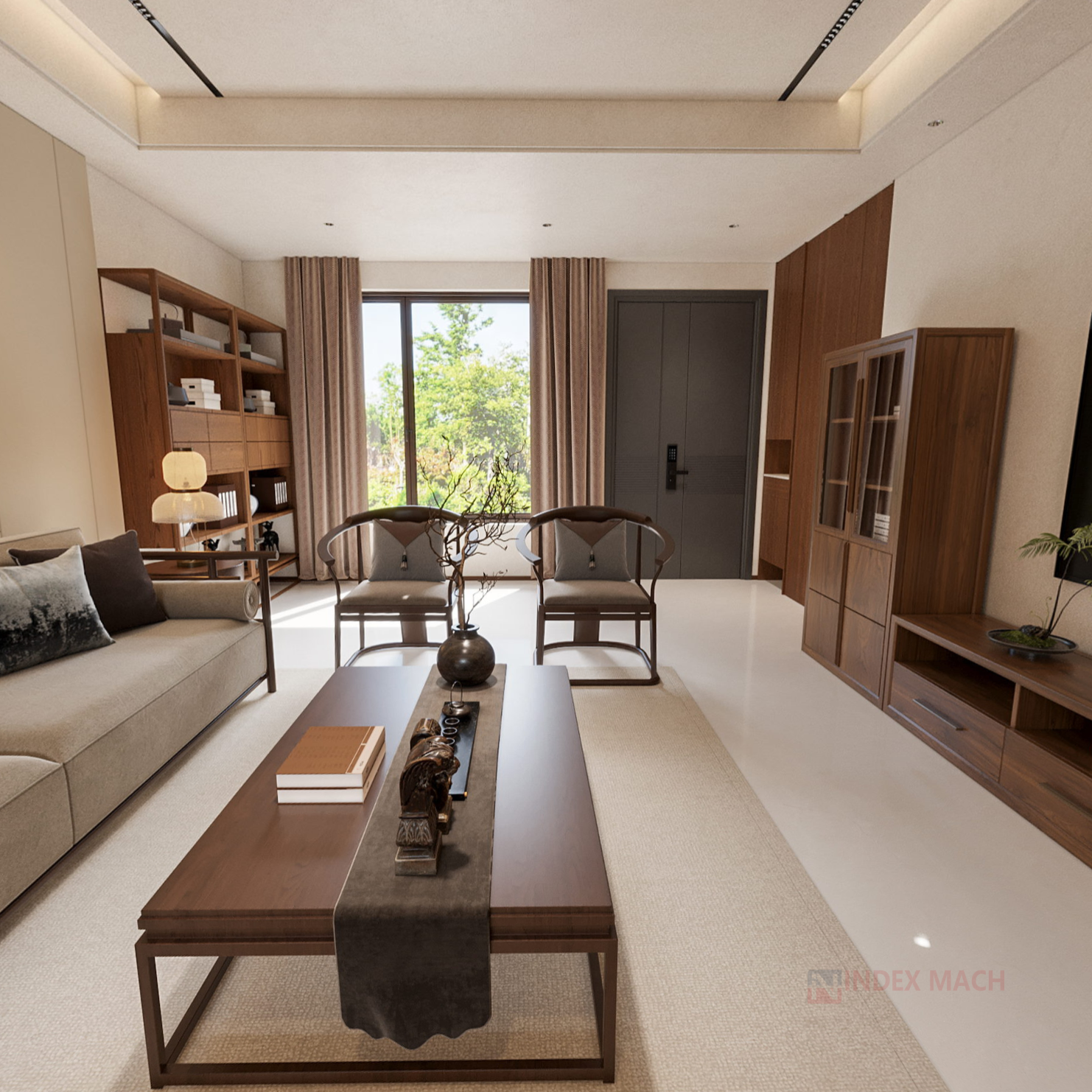
Cabinet CNC Routers Frequently Asked Questions

Frequently asked questions

What is a cabinet CNC router used for?

It nests kitchen-cabinet, wardrobe and flat-pack parts from full sheets — cut, drill and groove in one program on a vacuum table. That is the standard first CNC in a cabinet shop.

Is a nesting CNC the same as a computer panel saw?

No. See Nesting cell vs computer panel saw. Many plants run both: the saw for straight packs, the router for nested furniture parts.

Which table size — 1325 or 2030?

1325 fits a standard 4×8 ft sheet. Larger beds when you run 5×10 or oversized boards. Details in 1325 or a larger bed.

This machine already has ATC. When do I look at the ATC series?

See When to look at the ATC series instead. The nesting cell changes tools for cut, drill and groove on the sheet; the ATC series is for multi-tool door and mixed programs.

Will it run our CAD/CAM nesting software?

Yes. Machines accept standard G-code from mainstream nesting packages (Cabinet Vision, Alphacam, Vectric and similar posts). We supply a post-processor and set it up at commissioning.

Who should not buy a cabinet CNC router?

Skip this series if the daily job is acrylic signs, 3D carving, or lock/hinge pockets only. Those belong on ATC CNC routers, a 5-axis CNC router, or a door lock mortiser. Thick solid wood that will not seal on vacuum also needs a different hold-down — see Materials and thickness.

What voltage and lead time should a cabinet plant plan for?

Export cells are usually 380 V three-phase (220 V / 480 V on request). A standard 1325 nests in 15–30 working days after order confirmation; loading, labeling and outfeed add time. We confirm both with the layout.

How much does a cabinet CNC router cost?

Price depends on bed, loading and voltage. The current 1325 nest is the IMCR-CB1325 — see that page for the published range. Larger beds and auto infeed are quoted from the same series, not as a different family.

What training is included, and what should we send for a quote?

Layout, commissioning and operator training ship with the cell. Send sheet size, thickness, cabinets or sheets per day, CAD/CAM package, and plant voltage — see What to send for a layout.

Request a Demo